Joy

The rather wonderful Disney kids film ‘Inside Out’ suggests the eponymous ‘Joy’ (above) represents our original childlike state. In the film, the loss of ‘Joy’ deep into the vaults of memory is the bridge to the discovery of the more complex emotions of teen and adult years. 

It’s a lovely film. From our family watching experience, it helps both kids and adults better understand their emotions and personalities.

Interesting then – at the other end of life – to read two famous eighty year olds advocating the same simple emotion. The Dalai Lama and Archbishop Desmond Tutu invite us to do better than ‘happiness’: a rather stolid state of satisfaction; and aim for ‘joy’. 

So what makes for joy? Here’s what The Book of Joy says:

Our ability to cultivate joy has not been scientifically studied as thoroughly as out ability to cultivate happiness. In 1978 psychologists Philip Brickman, Dan Coates and Ronnie Janoff-Bulman published a landmark study that found that lottery winners were not significantly happier than those who had been paralysed in an accident. From this and subsequent work came the idea that have a “set point” that determines their happiness over the course of their life. In other words, we get accustomed to any new situation and inevitably return to our general state of happiness. 

I’ve read this before and there’s good and bad in it, I think. It helps with resilience as you know you’ll get through stuff, but doesn’t lead to much hope for joy; whatever you do you’ll just default back to ‘average’ happiness… But the next para is VERY encouraging:

However, more recent research by psychologist Sonja Lyubomirsky suggests that perhaps only 50% of our happiness is determined by immutable factors like our genes or temperament, our “set point.” The other half is decided by a combination of our circumstances, over which we may have very limited control, and our attitudes and actions, over which we have a great deal of control. According to Lyubomirsky, the three factors that seem to have the greatest influence on increasing our happiness are: 

  1. Our ability to reframe our situation more positively
  2. Our ability to experience gratitude
  3. Our choice to be kind and generous

These are exactly the attitudes and actions that the Dalai Lama and the Archbishop had already mentioned as central pillars of joy.

I realise looking at them that I really started making headway on the three factors in joy in my early forties – not the least through reading and blogging. 

As the saying goes ‘life begins at forty’. Perhaps if you’re lucky the rediscovery of ‘joy’ begins too.

Joy


I’m not big on joy – more steady progress, appreciation, a bit of peace… Joy is one of those ‘hot’ emotions, which can feel like it’ll just cause me bother or be too much like hard work.

So imagine my surprise (having been dreading it for weeks) to be utterly joyful last evening, at a work event. 

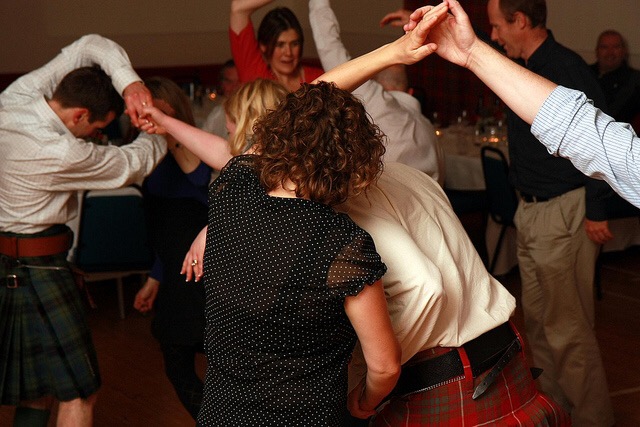
We had a ceilidh which involved 90 minutes of lung-busting jigging around bumping into each other; swinging folk you hardly know around, ‘stripping the willow’ and prancing like the ‘gay Gordons’. 

I had a spill and hit the deck, as we sought to spin our foursome fast enough, for the two ladies to take off and fly with centrifugal force. I then nearly re-enacted the Large Hadron Collider with a Greek particle physicist in some poorly-coordinated galloping. What a laugh. Everyone finished hot, flushed, sweating and beaming. 

The last time I remember everyone beaming like this at my work, was at an awards night when the staff choir brought the room to life. And this has set me thinking…

I’ve been listening to Bach’s passions this week – and perhaps there’s something to be said for a bit more joy. Singing, dancing, music, performance; they’re as old as the hills. But they still make life feel worth living. Here’s to joy.

Carol Singing

20111209-223056.jpg

School Christmas carols
Parents wedged in
Younger siblings
Making a din
Silence falls
Like a blanket of snow
Then many small voices
Sing tunes we all know
All upstanding
The grow-ups join in
All in good voice
The joy of a hymn
Our spirits all lifted
By seasonal cheer
The annual sing song
Gets better each year.

The annual Christmas carol service, at my daughter’s new school, is a step up from the childish plays of recent years.

Opened with an expert trumpet solo, studded with eloquent readings and conducted with vim and vigour throughout, this was a classy – and very traditional – Christmas performance.

She, smartly dressed in red shirt and blue skirt, never spotted us – lost in the crowd. But I could see her, through gaps in many heads, singing her little heart out. It lifted mine as I stood to sing too. You can’t beat a proper Christmas hymn.

Broadband

Our home broadband has been on the blink this week. You really miss it when it’s not there. Perhaps worse is when it comes and goes – one minute you’re surfing gaily, the next you’re beached with a ‘no network’ message.

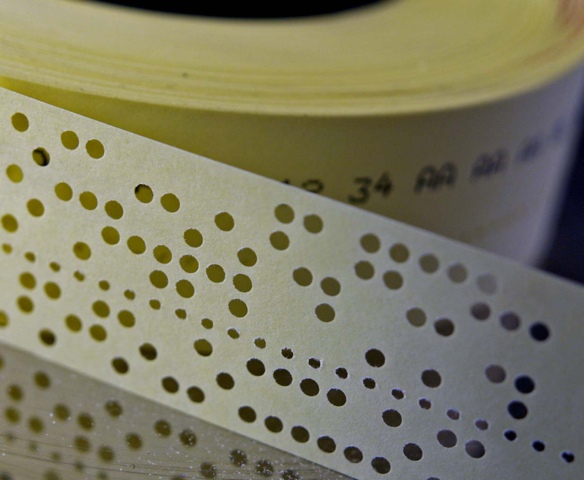
Csikszentmihalyi points out that, although impressive by electronic standards, the amount of data our minds can process simultaneously is surprisingly small. More punched tape than broadband. Two people talking to us at once or, say, riding a bike and whistling a song, just about exhausts our real time mental processing capacity. Any more and we lose attention and get distracted, flustered or confused.

I noticed it one day this week in the office. One minute I was churning out flowing prose, the next someone started talking in my earshot and I was distracted. I slowed to trickle – like someone was hogging my wifi. The talker left, bandwidth returned, and so did flowing prose. It was like flipping a switch.

Things, events, people and basic navigation are all basically different data and signals crowding in or cluttering up our cognitive bandwidth. This makes directing our consciousness and limited mental energy hard.

And it’s especially hard because life can easily just happen to us. Events and other people can readily soak up all the bandwidth we have. And if we do decide to use that precious resource on directed thought and action, we do so against a background of almost overwhelming distraction and diversions.

All life is, is the continual stream of sensory data, words, pictures, thoughts and ideas streaming through that narrow mental bandwidth. All we are, is the accumulated store of that data in the limited hard drives of our brains and to some extent those of others. It makes you think – until someone starts talking in your earshot and the mental connection is interrupted.

But given mental broadband is always there I’ve discovered I can redirect it when I catch myself wasting or underusing it. At work this week while being gently bored by a presenter on pan-European data collection standards, I contemplated the extraordinary beauty of a large tree – spare broadband successfully redeployed into joyful contemplation.

More experimental was testing optimising ‘flow’ by doing two different things simultaneously, and well. Combining loudly whistling the Marseillaise with cycling to work smoothly and safely through London traffic perfectly occupied my mental broadband. And in a heartily enjoyable way. Vive la France.

Our mental broadband has surprisingly limited peak capacity. But the compensation is it is ‘always on’. You can waste it or have it used for you, but you can also use it well. I found this week being more careful in how I deploy my personal ‘punched tape’ makes a big difference. Focusing its use on doing one or two things at a time really well – and exploiting every minute of it – whether I’m on my own, or with others, has removed a good deal of routine boredom and irritation from my week. Replacing that with moments of joy, satisfaction and genuine happiness is broadband well spent.

Waste not, want not.