Language

Re-reading a chapter of Herbert McCabe’s ‘On Aquinas’ last night, the outline of a new understanding emerged from the complex conceptual haze of the ‘philosophy of language’.

Language is the means through which we transcend individual experience and share our lives, ideas and culture with others. So far so obvious – Stephen Hawking’s is a brilliant mind but without a twitch sensor and a computer voice he’d be lost to us, alone trapped in his own head.

McCabe, following Aquinas and Wittgenstein considers language as exclusively ‘public’. It exists outside and apart from the sense perceptions of people – it has to otherwise it would not work as a means of sharing understanding.

So while my ‘red’ might look and feel different to yours (although probably not that much) as soon as we name it, it ceases to be my ‘property’ and becomes a shared one. As McCabe points out, my sense perceptions are my own, but my words ‘belong’ to the English language and are public, shared and ‘intersubjective’ – i.e. most people would agree on what they mean, otherwise they wouldn’t work.

Why is this so important? Well as Aristotle said: ‘It us the mark of an educated mind to be able to entertain a thought without accepting it’.

Similarly it is the mark of an animal with language to be able to describe, contemplate and imagine actions, not simply to feel, jump and act. Without language there is no reflection, just action and reaction.

For Aristotle, Aquinas, Wittgenstein and McCabe, language is not just a fancy tail feather or ornament on human intellect – it is human intellect. Language is the difference between pure instinct and intelligence, communication and culture.

The penny has dropped for me – something I didn’t ‘get’ when I did philosophy at University. David Hume and others persuaded me that sensations come first and language just describes them. But I now reckon it’s the other way around – language marks off and frames sensations so we can contemplate them. Language is not just communicating, it’s everything.

Language also connects us across boundaries of space and time. Herbert McCabe lives on through his limpid, lively philosophical prose. Like Montaigne, you feel you know the man when you read what McCabe has written. Shrewd, perhaps a little stubborn, quick-witted, sharp – and for a monk, disarmingly worldly and funny.

As Aristotle said, we are we repeatedly do. Perhaps, also, we are what we repeatedly write – poetry, prose or philosophy.
Shame There

Does seeing cruelty make us more or less likely to engage in it? Catalunya has just banned bullfights. But I saw one in Colombia nearly 20 years ago and felt I could see the nobility in it which Hemingway describes in ‘Death in the afternoon’.

Montaigne though thinks cruelty to animals does desensitise us:

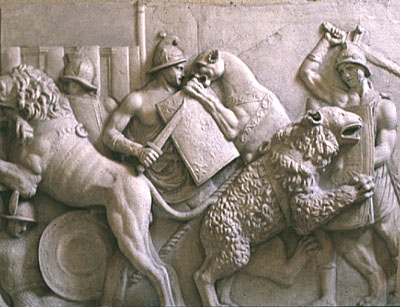
Those natures that are sanguinary towards beasts discover a natural proneness to cruelty. After they had accustomed themselves at Rome to spectacles of the slaughter of animals, they proceeded to those of the slaughter of men, of gladiators.

He also points out Karma was alive and kicking in Roman France:

The religion of our ancient Gauls maintained that souls, being eternal, never ceased to remove and shift their places from one body to another; mixing moreover with this fancy some consideration of divine justice, they said that God assigned it another body to inhabit, more or less painful, and proper for its condition:

If it had been valiant, he lodged it in the body of a lion; if voluptuous, in that of a hog; if timorous, in that of a hart or hare; if malicious, in that of a fox, and so of the rest, till having purified it by this chastisement, it again entered into the body of some other man.

But if we think animals deserve our humanity, only, to keep in check our brutality to each other, the story of Koko the Gorilla suggests they are well able to judge us too.

Koko, a 40 year old female Gorilla has mastered the American Sign Language for 2000 words. But like the Border Collie which has learnt the name of 4000 stuffed toys, it’s easy to dismiss this as trial and error ‘behaviourism’ – action for reward with nothing ‘thought’ in between.

The story told by the scientist who oversees Koko suggests differently:

“It happened by accident – someone sent a DVD about primates and I didn’t really look at it, but it was playing when I looked and saw Koko watching a graphic bushmeat scene. I hadn’t previewed it like I should have. The next day Koko picked up an insert from a newspaper and it was a supermarket ad. She held up a section full of pictures of meat and signed “Shame there.”

So simple, but so powerful as a summary of what we’re capable of. As Aristotle said we are the best and worst of animals.

The Eaves

Cycling to work every day I get a regular soaking. Decent waterproofs help. But there are days, when looking out of the kitchen window, I don’t fancy it much. A number of years ago in the book ‘Angry White Pyjamas’ I read a quote from the Hagakure – the Japanese Book of the Samurai. It advised stepping out from the eaves:

There is something to be learned from a rainstorm. When meeting with a sudden shower, you try not to get wet and run quickly along the road. But doing such things as passing under the eaves of houses, you still get wet. When you are resolved from the beginning, you will not be perplexed, though you still get the same soaking. This understanding extends to everything.

I was reminded of this, in the week, by Montaigne’s similar write-up on the Roman Legions:

Their military discipline was much ruder than ours, and accordingly produced much greater effects. The jeer that was given a Lacedaemonian soldier is marvellously pat to this purpose, who, in an expedition of war, was reproached for having been seen under the roof of a house: they were so inured to hardship that, let the weather be what it would, it was a shame to be seen under any other cover than the roof of heaven. We should not march our people very far at that rate.

I don’t mind being rained on, but I’ve often thought I’d last about five minutes on a proper Roman or Medieval battlefield. Some glum milling about before, and then probably a spirited moment of excessive unavoidable bravery early doors followed by a sharp death. That sounds about my fate. I can only assume my forebears were quick to procreate, as I don’t reckon we’d have lasted long.

But my other pet theory is we were scouts and messengers. Sharp eyed endurance runners with a precise tongue. Who knows. The Hagakure is admirably clear on the matter: ‘Bravery and cowardice are not things which can be conjectured in times of peace. They are in different categories.’

Some Hagakure quotes are positively Aristotelian, take:

‘Intelligence is nothing more than discussing things with others. Limitless wisdom comes of this.’

But like Aristotle, with his theories on biles and humours – and posture, character and beards – not everything in the Hagakure is to modern tastes. As ‘Angry White Pyjamas’ also highlighted:

When one departs for the front, he should carry rice in a bag. His underwear should be made from the skin of a badger. This way he will not have lice. In a long campaign, lice are troublesome.

I’ll step out from the eaves in GoreTex and Lycra, but I draw the line at the skin of a badger.

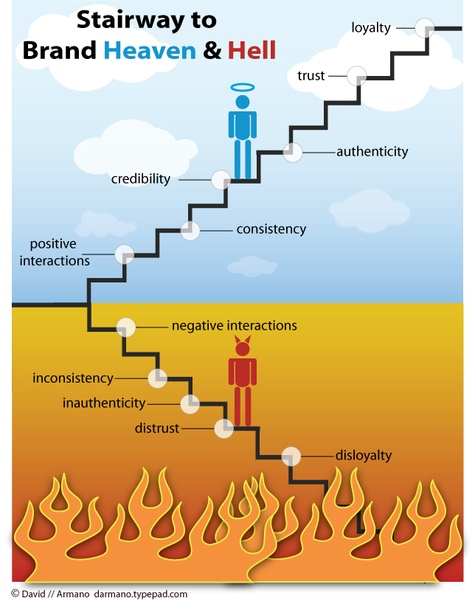
Heaven and Hell

I read in the New Scientist a while back that people who’ve suffered near death experiences commonly have a sense of drifting out of their bodies, floating above themselves and being drawn towards brightness above them.

Sounds heavenly. But according to the scientists there may be a simpler neurological explanation – the action of oxygen depletion on the brain.

My theory of Hell draws on Montaigne’s description of his near death experience falling off and being crushed by his horse. His delirium made time stand still, pain an irrelevance and his life pass before him scrambled in time and place by hallucination.

A troubled conscience taken into that context must be a special kind of torment. And stripped of all sense of time, it meets many of the classic criteria of Hell.

I watched the film ‘Source Code’ at the weekend. The hero is a massively injured soldier kept alive, artificially, so his brain can be deployed in a virtual timeshift to stop a ‘dirty bomb’. He saves the day. And his brain comes to a stop at a perfect moment – kissing the virtual ‘girl next door’ having saved millions of lives. Heaven.

We could all check out any minute. In olden times often with no warning in a brutal instant. Spartans sought glorious death on the battlefield – not much time to contemplate your sins in that kind of death. But there were plenty of other ways to go.

Montaigne, like the ancient philosophers he drew on, writes a lot about death. He points out:

We call that only a natural death; as if it were contrary to nature to see a man break his neck with a fall, be drowned in shipwreck, be snatched away with a pleurisy or the plague, and as if our ordinary condition did not expose us to these inconveniences… To die of old age is a death rare, extraordinary, and singular, and, therefore, so much less natural than the others; ’tis the last and extremest sort of dying: and the more remote, the less to be hoped for.

These days many of us will go slower and with plenty of time for delirium – troubled or ecstatic. Even in an accident there’s a fighting chance of oxygen, crash teams and intubation keeping you going long enough for a few timeless hallucinations. All the more reason to live well, without regret or a troubled conscience.

As Montaigne observes:

As an ill conscience fills us with fear, so a good one gives us greater confidence and assurance; and I can truly say that I have gone through several hazards with a more steady pace in consideration of the secret knowledge I had of my own will and the innocence of my intentions.

And quoting Ovid:

“As a man’s conscience is, so within hope or fear prevails.”

A clean conscience is a good principle for life. And, although I’m in no hurry to test it, I suspect also for death. If you buy my theory, bad deeds and a bad conscience could last an eternity in our final moments. Good ones potentially shimmer with ethereal light. Whatever you think comes next, a happy ending is another reason to invest in a good life in the here and now.

London’s Burning

As a red London bus burns a few hundred yards from our house, it’s one of those moments when you stop and think, ‘Did I get this very wrong?’

We have always taken the view that the ‘cheek by jowl’ nature of urban London was worth the aggro. It’s vivid, lively, mixed – at times a bit edgy but alive. And nice ‘people like us’ live dotted all around.

But people who are not like us live all around too. And when it all goes up in smoke and dead eyed teenagers smash up your high street, it makes you think.

In Aristotle’s day another city state or a neighbouring tyrant could violently disturb your contemplation. In Montaigne’s, frequent bouts of plague and civil war.

A few boarded up shop fronts and burnt out buildings is hardly a siege and sacking or a street by street pogrom. But still. It feels bad. I’ve been anxious today. For my kids, for my other half, our house and our safety. We are always but a few authority figures away from mindless violence, a few laws from anarchy.

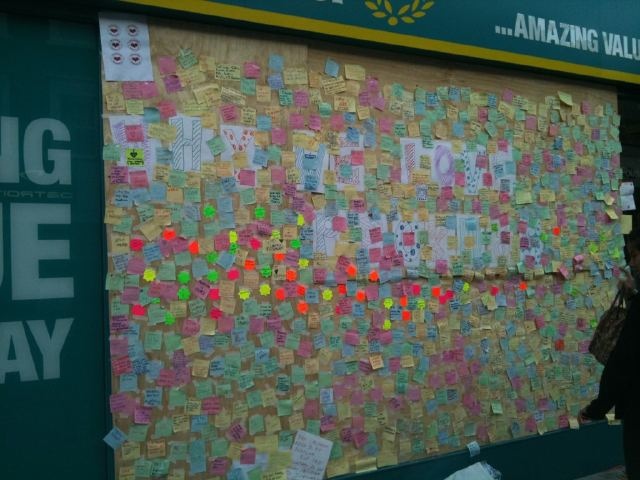
Ordinary decent people are feeling it too. I’ve seen several almost exaggerated acts of courtesy and consideration between people of all colours and classes on my way to and from work. Pausing to let each other pass, small acknowledgements and hesitant smiles. In these acts people are trying to say “It’s ok, we’re ok.” Post it notes on a boarded up shop eulogise our area and criticise the yobs. A volunteer army came out armed only with brooms to clean up.


It’s finely poised in London today. As Aristotle said man is both the best and worst of animals.