Guilt

I was reminded of one of my own ‘mottos at work’ this week – don’t start with an apology. We often start an encounter by excusing ourselves for things that aren’t really our fault. That, or making an unduly self-deprecating comment. Why?

Well when it comes to a big ballsy idea you can’t beat Nietzsche. What say you to this: all our animal instincts that don’t get let out into the real world get turned inside. This is Nietzsche’s idea that our ‘will to power’ is either expressed externally or turned in our ourselves – often as guilt.

Nietzsche is an interesting chap. Unashamedly elitist, cultured, a fine writer. But also discomforting and highly speculative. His punt – based on no particular evidence it must be said – is that there was a time when we were cruel but cheerful. Guilt didn’t exist. Just debts to repay and retribution to enact.

Depending on whether you were owed to or in debt, you were either cheerfully duffing someone up or being duffed up. But there were no hard feelings – even if it was painful and cruel. The nobly savage, jolly, barbarian life.

This reminds me of the Viking laws someone gave me a copy of a couple of years ago:

Be direct, brave and aggressive, grab all opportunities, use varying methods of attack, be versatile and agile, attack one target at a time, don’t plan everything in detail, use top quality weapons, keep weapons in good shape, keep yourself in good shape, find good battle comrades, agree on important points, choose one chief.

Not much introspection there. Sensible organisation, plenty of ‘flow’ potential and a good deal of what we would consider cruelty. I also suspect not much guilt… And by the sounds of it a fair bit of cheerfulness.

And this is what I find interesting in Nietzsche’s thesis. The barbarism and cruelty of dominance and power led to vivid, guilt free lives – nasty brutish and short no doubt, but vivid and guilt free. For Nietzsche, guilt is simply energy we can’t expend elsewhere. So why do we all feel guilty all the time?

Because we can never do enough (Kierkegaard) if anyone could view what we’re doing as wrong then it is wrong (Kant) and even when we do do the ‘right’ things they may turn out wrong (Mill).

Nietzsche asks a perfectly good question; why do we feel so guilty for everything? These days I’m feeling less guilty about spending that energy better elsewhere.
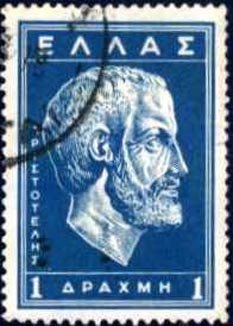
Poetics

Aristotle is always refreshingly plain on a subject. So when I read him, I find it easy to think he’s simply making a useful summary of a well known issue. But often he was creating the entire discipline; the first known thinker to frame or classify it. This makes his clarity and brevity all the more remarkable. And all this in 350 BC.

Among his intellectual inventions was the first setting out of the principles of ‘Poetics’, covering drama, tragedy and a lost volume on comedy.

Here he explains the origins and evolution of poetry:

Poetry in general seems to have sprung from two causes, each of them lying deep in our nature. First, the instinct of imitation is implanted in man from childhood, one difference between him and other animals being that he is the most imitative of living creatures, and through imitation learns his earliest lessons; and no less universal is the pleasure felt in things imitated.

Imitation, then, is one instinct of our nature. Next, there is the instinct for ‘harmony’ and rhythm, meters being manifestly sections of rhythm. Persons, therefore, starting with this natural gift developed by degrees their special aptitudes, till their rude improvisations gave birth to Poetry.

Poetry, myth and tragedy played important roles in Ancient Greece. According to Nietzsche they were instrumental in maintaining the vitality and optimism of Greek culture. Poetry, myth and tragedy also captured the essence of Ancient History. As Aristotle said:

Poetry is finer and more philosophical than history. For poetry expresses the universal and history only the particular.

Perhaps, like philosophy, poetry is less central to modern culture. But it’s still takes the same courage and skill:

Constantly risking absurdity, whenever he performs above the heads of his audience, the poet like an acrobat climbs on rime. (Lawrence Ferlinghetti, 1958)

It also connects the sublime with the ridiculous in the human condition:

Poetry is the achievement of the synthesis of hyacinths and biscuits. (Carl Sandburg, 1928)

But philosophy and poetry can still bring happiness, fulfilment and an opportunity to develop our natural gifts – till our ‘rude improvisations’ give birth to our own poetry.

Poetry in Motion

A few weeks ago, newly enamoured of poetry, I wrote a short ditty to capture what I think increasingly drives my life. It came out quite easily so I guessed it might be quite close. But then I forgot about it. Sat in traffic in the rain today, the last two lines came back to me unbidden. It has clearly lodged in my subconscious. So here it is:

Pay attention to life with bright eyes and keen ears.
Helped by poets and thinkers, refine hopes; master fears.

Embroider each minute and day of my years
with friendship and love and knowledge and ideas.

And the main credits are: for line 1) Montaigne and Aristotle; line 2) Aristotle, Kay, Csikszentmihalyi, Nietzsche, Homer, Armitage, Aquinas, McCabe, Socrates, Stoics, Sceptics; line 3) Me latterly; and line 4) Aristotle, Aquinas, my Friends in Contemplation, my family, reading, writing, work.

I’m not sure I’ll get a poster on the subway for these lines of rhyme, but they are pretty much where Eudaimonia lies for me I think.

Tragedies

I thoroughly enjoyed reading Simon Armitage’s updating of The Odyssey this week – a rattling good read, in my view. Our hero Odysseus, helped by Athene – and in spite of Poseidon and the only sometimes benign neglect of Zeus – overcomes a decade of trials and torments to return to the arms of his long-suffering Penelope.

Serendipitously, I also heard a Philosophy Bites about Nietzsche’s The Birth of Tragedy. Nietzsche argued Greek Tragedies were the perfect human and artistic response to the balance of ‘Dionysian’ chaos and ‘Apollonian’ order in life. The world is chaos and disorder (fickle gods) but humans can briefly rise above that to create pockets and moments of order (depending on the goodwill of the gods).

This tension of chaos and order, it is suggested, energises, drives virtue, excellence and courage and guards us against hubris and vanity. For Nietzsche, tragedies and myths enriched and invigorated Athenian culture, fuelling its dynamism, optimism and creativity – a latter day ‘Yes we can’ despite all evidence to the contrary.

I think he’s onto something. Planet Earth is an extraordinarily delicate life-boat in a cosmos of nothingness occasionally punctuated by ice, fire and crushing gravity. And our world wasn’t always so benign. On hols in France – watching an improbably large stork fly overhead – I was reminded of massive raptors bouyed by high levels of atmospheric oxygen, avoiding the constant vulcanism and raging forest fires which were the Carboniferous era. Pretty Dionysian. As The Odyssey teaches we can be heroic and stoic, but we are mere mortals against primal forces.

Enter Socrates – everything can be learned, mastered and understood by unrelenting reasoned debate and dialogue. The human mind can penetrate the deepest mysteries and bring order to nature’s chaos. And indeed we can to some degree – with a bit of observation and Aristotle’s scientific method thrown in. But like Odysseus, Achilles or Icarus we can all be raised up and brought low by the fates, with only chaos and chance as explanations.

For Nietzsche the pre-Socratic Greeks had it right. Tragedy and myths were the spiritual batteries of their culture – their way of coping with an unpredictable and inhospitable mother nature. But they could, through luck, bravery and virtue, enjoy moments of truimph and joy. Art lifted their spirits and their culture.

But then along came Socrates who badgered us into believing the world was rational. I like the Socratic method – stepping outside your own beliefs to examine them and debate them with others – but not his unintended consequence. Nietzsche accuses Socrates of killing art with reason and, with it, art’s ability to help us live with and laugh in the face of chaos.

I’ve cited Armitage’s Odysseus three times at work this week. It helped me and others understand and deal with our workplace fates and some all too human failings. It made us reflect, laugh a bit and cope better. Art imitating life or life imitating art? Either way, stepping outside our local tragedies to reflect on ancient ones seemed to help.