 My new theory of everything: all purpose and enjoyment in life is found in ‘relevant complexity’.
I came to the idea via the Hungarian American psychologist Mihili Csikszentmihalyi’s theory of ‘flow’: that we achieve optimum experience when we meet considerable challenge with considerable skill. Or put another way – when we master complexity.
I propose, that, the value of doing something and the intrinsic enjoyment in doing it, lies in it having and creating further ‘relevant complexity’. Let’s prove the pudding with food.
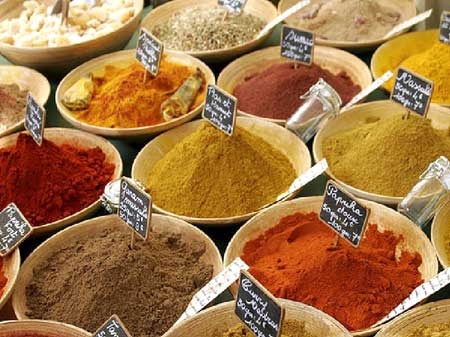
Does relevant complexity describe our relationship with food? Yes, I think it does. I’ve started doing lots of cooking lately – not least Indian. I seem to really enjoy it. Why? It needs doing. I get a break from the kids. When I get it right I get positive feedback from the missus. And, I mostly quite enjoy eating what I cook.
Notwithstanding there are some great dishes which are very simple, most of what’s considered ‘tasty’ in the world’s cuisines involves blending different ingredients, tastes and textures in relevant complexity.
To many, too much of one, one that’s out of place or the wrong blend of ingredients creates irrelevant complexity – often simply nasty. In fact I’d argue that even the simplest ‘great’ foods rely on great ingredients – which are often very complicated to grow, make or rear, requiring optimum care and conditions.
As the scientific chef Heston Blumenthal points out, cooking is applied chemistry. The complexity comes in applying it to that most unpredictable of non-linear systems – human taste.
And tastes develop and mature with experience. Taste doesn’t stand still, it is cultivated and grows. Blame ‘flow’, if the challenge doesn’t move on we become bored.
So, I conclude the joy in making and eating food lies in creating, enjoying and cultivating a taste for ‘relevant complexity’. It’s the spice of food life. Mmmm.

 Achilles & Aristotle