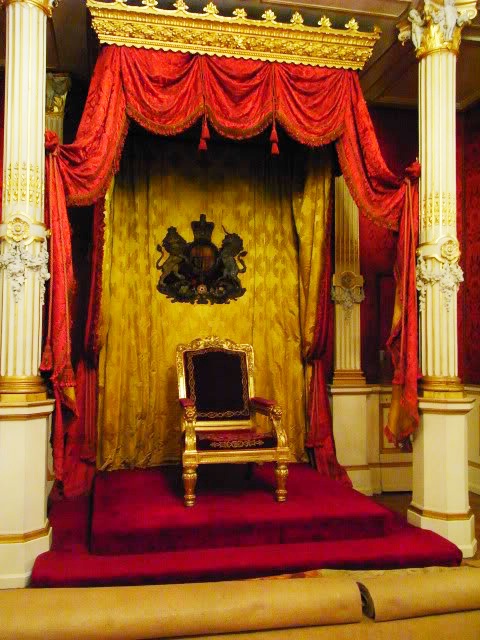
Thrones

Important to give credit where it is due, so here’s a plug for Sarah Bakewell’s ‘How to live: A life of Montaigne in one question and twenty attempts at an answer’.

I’ve found it a very good introduction to Montaigne the man, but I’m also enjoying finding out about his era of pre-enlightenment/renaissance France and how views of Montaigne changed in later centuries as people judged him and read him through the prism of their own times.

Robert Graves’ ‘Count Belisarius’, the last great Roman General I’ve written about before, was similarly (if fictionally) revealing of the era of Constantinople at the head of the Holy Roman Empire and the many fractious tribes of Europe and Asia Minor. These are periods and places which aren’t always part of the simplified historical narrative of why the world is currently as it is.

Several of Bakewell’s references are worth reprising – first a Spanish theologian (I wonder who?) opined that no state could be at peace “…if everyone considers his own God to be the only true God… and everyone else to be blind and deluded.” Surely, as true of our own personal opinions and beliefs as it is of nations.

But the pick of Montaigne for me is:

“On the loftiest throne in the world we are still sitting on our own rump.”

A reminder to let go of status, do as one would be done by and to live simply and well.

Status

I’ve been really struck in the past couple of weeks by how much some people define status in their lives through work. I was talking to a smart guy I’ve not seen for a couple of years about his mother who had a very big job, but was also refreshingly down to earth. He said “she recognised she had a serious job, but didn’t take herself too seriously because of it”.

This strikes me as a good approach. Some people have greater status needs than others. I think mine are less than many people’s. But I do also wonder if I think that, to some extent, because they are more than amply filled by my current job. Last week I did a speech to 100+ people on the 40th floor of a major bank to generous applause. I used to fear these sorts of things, now I almost enjoy them, but the fringe benefit is to feel I have a serious job, even if I don’t take myself too seriously because of it.

But in these recessionary times we all wonder from time to time whether this status might be rudely taken away by redundancy or our face not fitting. I know a couple of good, experienced people who got the bullet this week. In some ways worse is the more realistic realisation that I will likely be taking some people’s employment away from them in the coming months. I feel bad about this and think about it a lot.

I was talking to another professional in a different field about this on Friday and he said “hard decisions should feel hard”. I think he’s right, it’s all too easy to switch off your emotions, don the protective armour of ‘managerialism’ and simply ‘do what’s wanted’.

I think to downsize with care, empathy, kindness and self-respect is do-able. Engaging with people as people, not losing my humanity or switching off my emotions is an important part of doing this well. And ultimately if I am asked to do something I feel is wrong, finding the courage to say I feel it is wrong and being brave enough to risk my own job and status feels important too.

The paradox of job cuts is what’s brave is to do the right thing for the many as well as deal with individual people with care, integrity and humanity. The cowardly thing is to ‘act tough’, switch off your emotions and use the excuse of managerialism whilst saving your own skin.

What looks and is often rewarded as ‘tough’ in job cuts is in fact comparatively easy in my experience. What is hard is caring, thinking fully about the consequences of what you are doing and doing it right.