Today

I heard Simon Armitage read his poem ‘Knowing what we know now’ on the Today Programme on Radio 4 on Wednesday. It features an Elf who makes the offer of turning the clock back to a man who is 44 – exactly half-way to the end of his life. It has a twist in its tale which I didn’t welcome but it certainly set me thinking. 

As I’ve written before it’s increasingly likely that I’m at, or close to, what Armitage’s elf calls the ‘tipping point’ – the half way mark. On Saturday morning in an unconnected thought I put it to myself, what am I going to do that will be memorable today? Cue 3 year old. I spent 3 hours doing 3 miles and 3 parks on a scooter with my son. We had great fun on what could otherwise have been a grey day. I love that boy.

Pondering it this evening, I thought to myself; what would be different if I counted life more often in days, not halves or years? Tapping 365 into a calculator, I realised that in the last year or so I’ve passed the milestone of living over 15,000 days. It’s a bit like when all the 9s turn over on another 10,000 on your car milage. That’s a lot of days. And since I reckon I have a reasonable hope of living another 15,000 that’s a lot of great days if I make them so.

And this reminded me of Seneca’s: ‘On the shortness of life‘. At the start he gently criticises Aristotle for bemoaning that nature has given man such a short span of life, for our many and great achievements, when animals have so long for so little. Seneca disagrees:

‘It is not that we have a short space of time, but that we waste so much of it.’

I listened to a very experienced and senior person describe his career on Friday. He had many thought-provoking things to say. But the one that stuck the most for me was a comparatively obvious one; you’ll spend more time working than doing anything else so make sure you do something you enjoy. He used the word ‘fun’ all the time to describe his work – great, enormous, tremendous… fun. Not a word I use anywhere near enough describe my working life.

And that is the thing I’ve been thinking about this weekend: enjoyment, fun and spontaneity. Thinking I’m half way to death makes me sombre and cerebral. Thinking I’ve got another 40 years, and probably another 20 odd of work, makes me think about my career and mortgage and school fees. Thinking I’ve got another 15,000 days makes me think about today – what’s going to be today’s highlight, what’s going to be today’s memory, what’s going to be today’s fun. 

As Seneca has it, the philosopher makes his life long by recollecting the past, using the present and anticipating the future. The most important of these for me though is remembering to have fun – today. 
Corporate Punishment v) Bad Behaviour

All organisations struggle with performance management. But in my experience, none more so than long-service public bodies.

I found this particularly acute as a Senior Civil Servant in UK Government. The main issue is often not capability, or even performance per se, but attitudes and behaviours which bring everyone and everything down.

Perhaps frustrated ambition is a factor. Being constantly overlooked for promotion and not ‘progressing’ can sour anyone over time – not least as promotion is usually the only way to get a pay rise. There are also those with rose-tinted memories of happier times who lament what they perceive, rightly or wrongly, as the ever degrading psychological contract between employer and employee.

Tidying up the other day, I found this list of ‘frequently encountered behaviours’ from my time in central Government. I worked with other senior people and developed a handy guide to tackling each too. That helped. Or at least helped me remain sane.

Re-reading them I’m so glad to be out of that context:

MANAGING BEHAVIOURS

The stereotypes below are behaviours that people can display and do not describe people themselves. Your own behaviour can elicit different reactions and you should be aware of the styles and behaviours you display before challenging them in others. People may adopt a mixture of these behaviours, switch or deploy several at once. Nevertheless, these stereotypes are based on real life situations people have described when managing the behaviour of civil servants.

1) AFFABLE – happily acknowledge shortcomings and performance issues, but either say that’s just the way they are and they can’t really change or say they might try to do something different but don’t follow through.

2) CHOOSY – enthusiastically focus on the list of things they have done, like to do or can do and make you feel guilty about challenging them on other aspects of the job or performance.

3) PLODDING/JOB’S WORTH – argue for narrow definitions of their role, justify performance on historic grounds – “I’ve always done it this way and no-one has complained”, may stress they work to live not live to work.

4) HYPOCHONDRIAC – focused only on themselves and their own workload, don’t recognise context or pressures others face, often refuse offers of help or resource as no-one else is sufficiently able or knowledgeable. (Often comes with Perfectionism as below)

5) HIJACKERS – often deployed by hoarders of information, relationships, skills, processes or technologies, hijacking is implicitly or explicitly threatening withdrawal of key ‘know-how’ with catastrophic consequences.

6) EMOTIONAL BLACKMAIL – using emotions and sometimes tears to stop a discussion on performance and in extreme cases displaying their upset to colleagues and other team members to rebuke you.

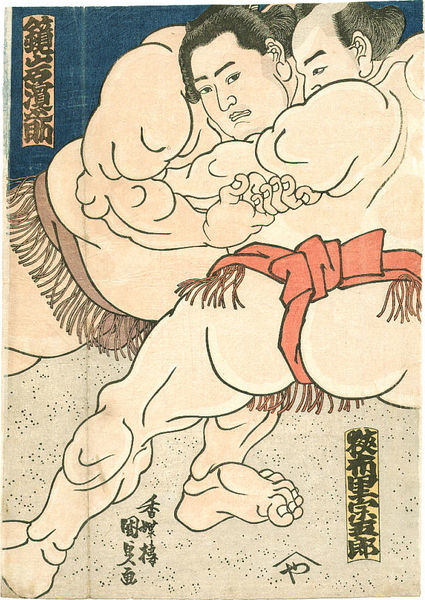
7) SUMO WRESTLING – coming back at you hard, challenging or criticising your style or behaviour to try to knock you back and barge you out of the ring.

8 ) PERFECTIONISM – often backed by great delivery, but often at great cost either to the person or those around them, aggressive defensiveness about excessive, exclusive or obsessive focus on their own work.

9) PAIN IN THE @RSE – antagonistic, argumentative, dogged, ignoring your context and time pressures often ultra-critical of the organisation, people or processes.

10) STAR QUALITIES – listening, taking responsibility, offering to help, making suggestions for improvement and change, sharing pressures, offering to lead and deliver. Make time to recognise, nurture, support and reward any of these behaviours at all costs.

Adjacent Possible

I read recently that all successful innovation expands into the ‘adjacent possible’. Whether it’s spines becoming feathers, swords becoming ploughshares or mobiles becoming smartphones, successful innovation depends on adapting technology to expand into an adjacent – and sometimes very different niche.

It’s also a useful metaphor for work and life. It’s a dangerous business trying to change everything all at once or trying to leap from one paradigm to a completely different one. I worked for two organisations which set out to change their whole market in the 1990s. In one we got it right, by applying an ‘adjacent’ idea from the restaurant business to mobile phones. The other had exactly the right strategy – cloud computing – just ten years too early. That organisation largely destroyed itself trying to create a new ‘non-adjacent’ future before people or the technology were ready.

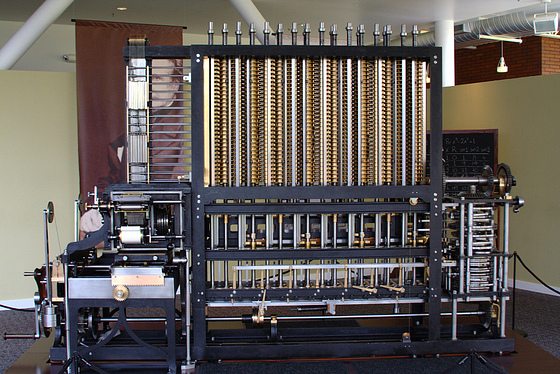
Charles Babbage’s Victorian computer was way before it’s time. But despite its potential people stayed wedded to the steam age. A friend told me in ancient Alexandria an inventor allegedly created a tiny table top steam engine, but considered it a mere curiosity – who needs steam power when you have slave labour.

So what of the iPad? Steve Jobs famously failed with the Apple Newton: too big, too slow, too expensive, no market. I bought an iPad in September more out of a sense of duty than belief. I wasn’t sure I needed one, but discovered I more or less do. For me the most amazing ‘adjacent possible’ that lies latent in the iPad is the ability to span all ages. My pre-school son can use it happily and so can his grandmother. We bought my parents an iPad for Christmas and she is now sending email.

Seizing the ‘adjacent possible’ doesn’t necessarily mean incrementalism – there are huge advances to be made by looking at the opportunity next door or putting familiar ideas and capabilities in new configurations. I learnt some years after applying ‘set menus’ to mobile phones that there is a well established marketing creativity trick called ‘related worlds’; namely, looking for new product ideas and inspiration in other sectors. As I emailed back to my mum this morning, she has leapt from the computing stone age to the 21st century in one graceful bound. She’s surfing the web and connected for the first time in her life – thanks to the re-imagined and simplified interface of iPad.

‘Think different’ was Apple’s strapline in the 1990s. It’s good advice. Neither a big phone nor a small computer, iPad is less than either. But it is more than both combined in getting my mum online. Hats off to Steve Jobs – he’s not ‘man of the year’ for nothing.

As soon as iPad became adjacent Steve Jobs made it possible and created new adjacent possibilities for millions of people. I’m writing on one now.

Corporate Punishment iv) Too much to say

It is a truism that no-one is more interested in what we have to say than ourselves. On the contrary, it is a common misapprehension that the more you say the more influential you are being. It ain’t necessarily so. As so often in life, less is often more.

As the great Roman stoic Seneca said:

It is a great thing to know the season for speech and the season for silence.

Enough said.

Smiling

Against the grain today I put on a smiling face. In so doing I added measurably to the sum of human happiness. So simple, yet sometimes so hard. Why don’t we all do it more?

I can’t take all the credit. I was kickstarted by two people – one I know well, one I don’t. After a shirty start and shouting at each other, my son and I made it to nursery on a cold, grey, damp morning. He was glum, I was in a bit of a rush. As I turned to leave he asked for a cuddle and I knelt down and gave him a big all body hug. We smiled. He was ok, I was ok. The cascade of smiles began. 

I smiled at my daughter in the schoolyard and at the teachers who smiled back. I chose a smiley stripy shirt for work and then whistled Christmas tunes through the drizzle on my bike in. I went to buy a coffee and as I waited the friendly young foreigner behind the counter gave me a winning smile and asked me how I was. It was such a winning smile, I gave him a winning smile back and exchanged jovial small talk about the coming snow and all the customers and servers joined in. We all smiled.

I walked round the corner to work whistling ‘Walking in a winter wonderland’. Once in the office I smiled at the security guards and receptionists and walked past the lifts to the seven flights of stairs I hack up every morning. I decided to whistle ‘Walking in a winter wonderland’ as I climbed the stairs to see if I could a) not be embarrassed or cowed by reproachful looks into glumness and b) get a smile out of the random selection of people I might pass.

Tricky start. First up I bumped into a chap who hasn’t made eye contact with me for 6 weeks since my new organisational strategy consigned his section and personal passion to frozen assets and deep cuts. He’s furious with me, and how ever much I’ve tried he won’t acknowledge me if we pass in the building. The whistling got him though. He looked, I captured his curious and unsuspecting gaze and flashed him a winning smile and a cheery salutation. He couldn’t resist smiling back and finally saying hello.

Next I whistled past another urgent faced, rushing, anxious looking senior colleague. He was equally surprised and switched from frowning to smiling. I passed another person I don’t know who also by the alchemy of Christmas went from neutral to smiling within nine whistled notes ‘Walk-ing in a win-ter won-der-land’. 

By the fourth flight of stairs my whistling was getting a bit uneven as I ran out of breath. By the fifth I gave up. On the sixth I bumped into another colleague and told him what I’d been up to. He was both bemused and amused. But it got him smiling. Onto the seventh flight and into my office and I was full of good cheer. The day started well, I performed well, did some important things and remained cheerful throughout. 

I ended the day with a woman I work with who can be challenging and confrontational. She is also a person of genuine conviction and intelligence. We were on the topic of making an impact and being true to yourself whilst speaking the truth to power. I told her that whilst being far from the finished product myself on this, sometimes a lot hinges on how you decide to ‘be’. If you decide to be high energy you can bring energy, if you decide to be aggressive you can scare people, if you decide to be warm you can attract, if you decide to be cold you can chill. 

We are all affected by how others are ‘being’ too but to some degree we have a choice about how we are. She had been open, supportive, thoughtful and measured when we met in an important meeting earlier in the day. She had got much of what she wanted without confrontation or a furrowed brow. As I said to her, when I was asked, my main memory of her in the meeting was relaxed and open with a smooth forehead, high eyebrows and a smile. We had all warmed to her. Maybe I had helped a little as I gave her a big encouraging smile when she came in the room.

If so, it had all started with a big hug from a small boy and a smile from a complete stranger. Smiling, it’s powerful stuff.