The Undiscovered Continent

I discovered a poem I liked by Emily Dickinson in a poetry anthology. Her words seemed fresh, direct and unaffected. So I looked to see whether she was still writing. A surprise then to see she wrote the words in 1862.

I asked my partner who knows more about literature than me. ‘She’s American, I think’ she said. Transpires she is, from Massachusetts. Reclusive and introverted, Emily lived through letters. But, as with many writers throughout history, it only became evident how much she’d written after her death. Thousands of poems.

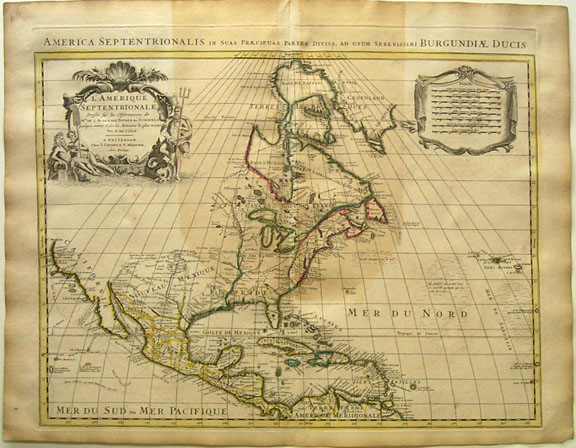
She lived much of her later life in what she called the ‘undiscovered continent’ of the mind and soul. She seemed to think of it as an almost a physical place you can inhabit and explore.

This set me thinking – puttering through slow traffic today – of Socrates. He thought everything could be discovered by earnest dialogue and reason – the answers are all there to be found in our heads if we are rigourous and vigourous enough.

Or Berkeley the ‘idealist’ philosopher, who argued that everything we see, touch and feel is ‘mind’ not matter. Then there are contemporary philosophers, who tease undergraduates with solipsism, asking ‘Are we sure it’s not all in our heads’.

The ‘undiscovered continent’ of the mind is a tempting destination. But it’s attractions need to be treated with care. Life is enriched by real world observation and experience and is best explored with friends.

A reclusive life might find order. But the beauty and brutality of nature, the intense experiences of life and the fickle gods of chance are in the material world. The ‘undiscovered continent’ is a place I like to visit, but isn’t a place to live I feel.

Here’s the line from Emily Dickinson which drew me to her and her poetry.

I dwell in possibility, a fairer house than prose, more numerous of windows – superior for doors.

Bees

http://www.flickr.com/photos/autanex/I was talking to a very good friend yesterday about bees. It came up in a digression about the very different ways some people find to live a life.

He described the case of a foal, born prematurely, who had imprinted on the people who’d nurtured it. Spurning other horses, the foal considered itself eminently human and preferred the company of people. A problem for it and them.

More remarkable was the solution – a horse-whispering woman – who makes a living going round the country brokering misguided premature foals back into the world of horses. She eases their separation from the two-legged world back to four.

In exchange, I told him about my conversation with a nomadic beekeeper this spring. Bee keeping, it appears, is all about titivating, then tempering, the hive’s desire to swarm. A healthy, happy, busy hive is a productive hive. But a productive hive is also an unstable one.

Experienced workers get itchy feet and start looking for new opportunities. Young upstart queens start getting restive, fancying their own realms. The hive is dripping with honey, but disaster threatens – 60% of the hive swarming off with a new queen – leaving a remnant hive which will take a year to produce again. No honey for the autumn pot.

Separating queens, creating sub-hives, clipping wings are all recognised measures. But the more the beekeeper gambles, the more risk that several queens buzz off. Or worse, the entire hive ‘absconds’ in the vernacular. Ouch. My nomadic beekeeper had about five queens on the go, in three sub-hives, all itching to swarm and pumping honey like a Texas gusher. He lives his beekeeping on the edge.

In olden days they worried less. Beekeepers trusted to chance and mother nature. Wikipedia offers the wisdom of a gentler era:

Old fashioned laissez-faire beekeeping depended upon the capture of swarms to replenish beekeeper colonies and early swarms were especially valued. An old English poem says:

A swarm of bees in May is worth a load of hay;
A swarm of bees in June is worth a silver spoon;
But a swarm of bees in July isn’t worth a fly.

The world of bees has moved on from the buzz and burr of rural idyll. Much like the world of work, it’s all more organised now. Productivity and efficiency are to the fore not serendipity and chance.

My friend and I agreed, with bees – as in working life – keeping the hive busy and productive is a fine art. Swarming costs you honey and money. Disturbing the hive gets you stung. One of my golden rules for work, is never whack too many beehives at once.

There is evidence, the nomadic beekeeper told me, that honey bees followed humans out of Africa. Who was following whom and who got more from it I wonder? Bees are eusocial – they work together. Humans are social and selfish simultaneously, only very careful beekeeping keeps a human hive happy. There’s a lot we can learn from bees.

Superhero

20110619-111639.jpgMy son announced this morning, in the car, that he has the superpower of sellotape. This enables him to stick inanimate objects together almost at will.

Fired from his hands in the manner of Spiderman’s webs, I remarked that his sellotape shots could prove mighty useful at present wrapping time. But his sister wasn’t impressed.

‘Show us then’ she challenged him. But he demurred. ‘I’m only a superhero on Tuesdays’ he said, confounding her. It’s hard work saving the world with sellotape, you have to sympathise. None of us can be a superhero every day.

Elemental

The late Herbert McCabe wrote with almost scientific beauty on Aristotle and Aquinas. There is a tightness and precision which bespeaks a lifetime’s reflection and contemplation.

The international physics community has just acknowledged two new superheavy elements – 114 and 116 – which can only be made by man. In his book ‘On Aquinas’, McCabe has fused together all the elements in philosophical symmetry from the two historic heavyweights: Aristotle and Aquinas.

He manages some lighter metaphors though. Describing the difference between following rules and developing virtue he draws on football. Learning the rules of football won’t make you a good player, practice alone makes perfect. Similarly our ‘friends’, in the Aristotelian sense, are our purpose, practice and team-mates. Here’s what he has to say:

From the point of view of moral philosophy the game is friendship (philia) in the sense which Aristotle described it as that relationship by which people are fellow-citizens; and it is more than justice. Justice is the minimum proper relationship with foreigners, but, in addition to this, citizenship demands a concern for the flourishing of your friends, a concern, therefore for their virtues and their concern for my virtues. Friendship is both the aim of all the virtues and also the necessary means by which virtues are cultivated, sustained and developed. Virtues can only be taught by friends. Friendship can only be sustained by virtues.

Past thinkers have discovered all the elements of the ethical periodic table. But McCabe showed there are still elegant and beautiful new ways to bring them together.

Xerxes

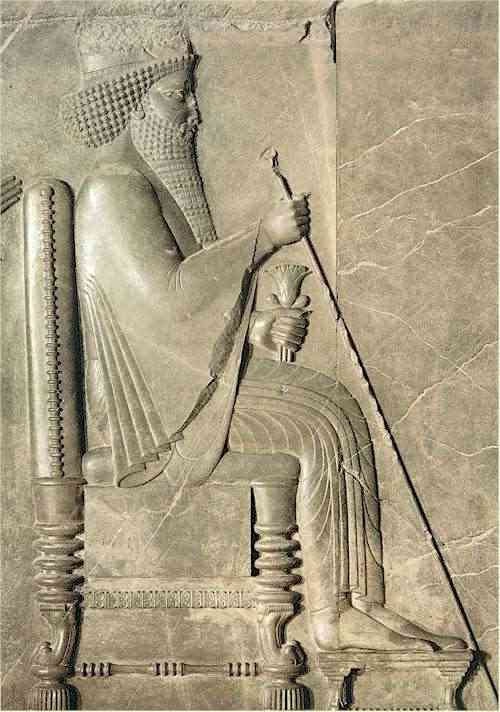
Xerxes – controversially portrayed as a narcissistic androgynous giant in the blood-spattered film 300 – broke with Persian tradition and laid waste to allies and enemies with enormous forces, before losing interest, losing ground and retiring to lotus eating and luxury. Or so some say.

His patina of invincibility was chipped by Leonidas’s legendary 300 Spartans’ suicidal defiance at the ‘hot gates’ of Thermopylae. A Persian General said of them: “Ye Gods, Mardonius, what men have you brought us to fight against? Men that fight not for gold, but for glory.” Spartans sought their immortality in glorious death.

In film and folklore Xerxes was a god amongst men before succumbing to human frailties. Is Xerxes a myth, a legend or history? Probably a bit of all three. A reading of Robert Graves’ Greek Myths suggests most ancient history, legend and mythology is in fact a bit of all three.

But a tale from Montaigne’s suggests that even as Xerxes set out to conquer all, he saw, in the same instant, the limits to his dominance:

Montaigne XXXVII

Artabanus coming by surprise once upon his nephew Xerxes, chid him for the sudden alteration of his countenance. He was considering the immeasurable greatness of his forces passing over the Hellespont for the Grecian expedition: he was first seized with a palpitation of joy, to see so many millions of men under his command, and this appeared in the gaiety of his looks: but his thoughts at the same instant suggesting to him that of so many lives, within a century at most, there would not be one left, he presently knit his brows and grew sad, even to tears.

Greek myths tell us that power and glory are always transient. Even the most powerful among us are mayflies in historical, let alone geological time. Xerxes is a reminder that men cannot be gods. We have at best three score and ten, whether we are millions or 300 men. It behoves us to use our time well.