The Good Life

I used to be a strict Act Utilitarian – the moral act is the one that produces the most overall happiness or least harm. The undergraduate philosophy case studies all seemed clear cut to me.

Knowing what we know now, would I have assassinated Hitler in 1934? Sure would. If a sadistic Generalissimo passed me a gun to kill an innocent in exchange for the lives of several others, would I pull the trigger? Under duress and with no alternatives, reluctantly, yes.

To my untrained late-teen moral mind, rational calculations seemed to provide a better framework than the rules of religions and imperfect man-made moral codes. Undergraduate philosophy taught me how to ‘reductio ad absurdam’ any nuance or shade of grey. Life was black and white. Add it up, make the call, don’t expect to be understood, live with the consequences.

But the pointer on my my moral compass started twitching in my mid-thirties. Act Utilitarianism can feel calculating, look immoral and set bad precedents. A good outcome is a bad justification for a rotten process. Some things shouldn’t go under the wheels as we drive hard to a destination. We have to stand for some things, or we stand for nothing. Sometimes what the head can justify sickens the heart.

Enter Aristotle in my Forties. Eudaimonia, arete and telos – flourishing, excellence and fulfilling our innate potential – they feel like the ingredients of a good life to me. There are some rules and a handful of prohibitions in Aristotle’s Ethics. But ‘moderation in all things’ is the basic gist. Thinking and talking about Aristotle this week, I have a clearer idea why I prefer the life’s work of ‘eudaimonia’, to the instant gratification of ‘happiness’, as a moral end.

Happiness is a mental ‘state’. In eras where life was nasty, brutish and short it must have been pretty rare. Perhaps no surprise then that ‘happiness’ bubbled to the surface with Bentham and Mill as the ‘Dark Satanic Mills’ were robbing people of eudaimonia and the ‘telos’ of crafts and village life. William Blake, whose poems I’m reading at the moment, gives a flavour of this in ‘Songs of Innocence and Experience’.

But in the affluent, materialist, 21st century Western world, I fear happiness is a false god. Sex, drugs and rock ‘n’ roll put transitory hedonistic pleasure on an altar. Thinking about this, I was reminded of another undergraduate philosophy ‘thought experiment’ – the brain in a vat. What if all my sensations are fed me by a mad scientist thorough electrodes plugged into my brain?

Here in the ‘real’ world we are closer and closer to being able to live purely for audio-visual, digital and chemical pleasures without needing a mad scientist. People need to participate in their lives not plug in, switch off and get high. This is substantially Csikszentmihalyi’s case for embroidering our lives with varied challenges, new skills and personal growth.

Aristotle gives life an achievable and worthwhile end – to be the best of who we are. It is an optimistic, forgiving, perfectible, self-improving and thoroughly ‘open system’ – in his nutshell: ‘we are what we repeatedly do’.

Virtues and excellence grow with our actions, a little reflection and lots of practice. There’s plenty of room in Aristotle for happiness – especially through friends. There’s an explicit acknowledgement of ‘flow’ – the work of the harp player is to play the harp, and of the good harp player to play the harp well. But above all the good life is the one we lead every day by growing, improving, refining, learning, reflecting and acting.

I think Aristotle trains core moral strength better than the rational calculation of Utilitarianism. Better to act, learn, feel and constantly improve than use intellectual brute force to calculate the answers. Life is more Bayesian than arithmetic, more non-linear than deterministic. It’s a life’s work to work on the answers for myself – and to enjoy the journey.

Sinister

20110515-080333.jpgI’ve always been more dextra than sinistre. Right-handed, very right-footed and very left-brained. But I worry for my son. With no left foot he’ll never make the England football team. Plus he’d stand a better chance of becoming a test batsman or bowler if he was a ‘cack hander’.

So a few weeks back I resolved to only dribble and kick footballs left-footedly to set him an example. I’ve also started brushing my teeth with my left hand. I’m slowly becoming quite accomplished.

Still, I was roundly beaten in a trial of strength at left handed handwriting by my daughter. She very much has the upper left hand.

When I told a friend about left-handed tooth-brushing, he smiled. Transpires he’s a left-hander. But he owned up to standing on one leg while brushing his teeth – very good for balance. Ronald Reagan famously said he always put his socks on balancing on one foot to keep him young.

This morning I brushed left-handed, balanced left-footed and burst out laughing as I did my teeth. A perfect example of the joy of ‘flow’ – being immersed in an engaging challenge, however small. Certainly nothing sinister about that.

Broadband

Our home broadband has been on the blink this week. You really miss it when it’s not there. Perhaps worse is when it comes and goes – one minute you’re surfing gaily, the next you’re beached with a ‘no network’ message.

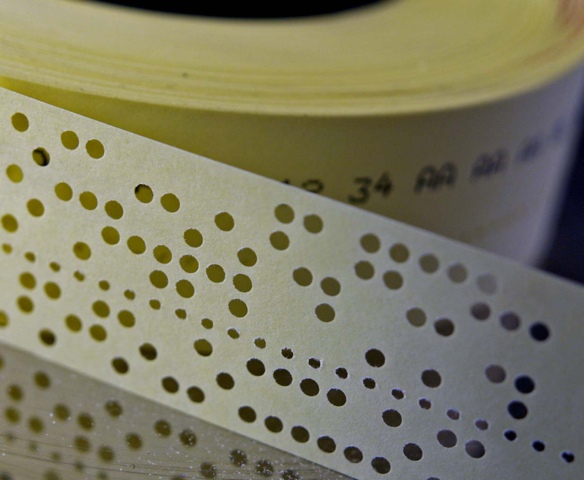
Csikszentmihalyi points out that, although impressive by electronic standards, the amount of data our minds can process simultaneously is surprisingly small. More punched tape than broadband. Two people talking to us at once or, say, riding a bike and whistling a song, just about exhausts our real time mental processing capacity. Any more and we lose attention and get distracted, flustered or confused.

I noticed it one day this week in the office. One minute I was churning out flowing prose, the next someone started talking in my earshot and I was distracted. I slowed to trickle – like someone was hogging my wifi. The talker left, bandwidth returned, and so did flowing prose. It was like flipping a switch.

Things, events, people and basic navigation are all basically different data and signals crowding in or cluttering up our cognitive bandwidth. This makes directing our consciousness and limited mental energy hard.

And it’s especially hard because life can easily just happen to us. Events and other people can readily soak up all the bandwidth we have. And if we do decide to use that precious resource on directed thought and action, we do so against a background of almost overwhelming distraction and diversions.

All life is, is the continual stream of sensory data, words, pictures, thoughts and ideas streaming through that narrow mental bandwidth. All we are, is the accumulated store of that data in the limited hard drives of our brains and to some extent those of others. It makes you think – until someone starts talking in your earshot and the mental connection is interrupted.

But given mental broadband is always there I’ve discovered I can redirect it when I catch myself wasting or underusing it. At work this week while being gently bored by a presenter on pan-European data collection standards, I contemplated the extraordinary beauty of a large tree – spare broadband successfully redeployed into joyful contemplation.

More experimental was testing optimising ‘flow’ by doing two different things simultaneously, and well. Combining loudly whistling the Marseillaise with cycling to work smoothly and safely through London traffic perfectly occupied my mental broadband. And in a heartily enjoyable way. Vive la France.

Our mental broadband has surprisingly limited peak capacity. But the compensation is it is ‘always on’. You can waste it or have it used for you, but you can also use it well. I found this week being more careful in how I deploy my personal ‘punched tape’ makes a big difference. Focusing its use on doing one or two things at a time really well – and exploiting every minute of it – whether I’m on my own, or with others, has removed a good deal of routine boredom and irritation from my week. Replacing that with moments of joy, satisfaction and genuine happiness is broadband well spent.

Waste not, want not.

Immersion

Concentrating on boiling a ham on the hob yesterday, I was reminded of a key aspect of ‘flow’ – immersion. ‘Flow’ is ceasing to be self-conscious or unduly conscious of others and becoming thoroughly immersed in the task or activity.

When you look at it this way, a number of things we usually consider important in enjoyable achievement turn out not to be – notably the immediate judgement and appreciation of others. Also, a variety of things we consider dull can suddenly become a joy.

Take hoovering the house. Usually a chore, and one I resent. I enter into it – if at all – with little a priori enthusiasm. I have, however, discovered it passes more easily with an iPod, headphones and music.

Surprising then to discover last weekend during a particularly energetic and virtuoso vacuum – as I removed the ‘T head’ to more precisely target the skirting boards in the kitchen – I was in full ‘flow’. It was an absorbing task, in which my goal was evident, feedback clear (disappearing crumbs and detritus) and my mental energy was fully absorbed (in music and coordinated physical effort). Stone me, it’s that simple I realised.

I was talking to another parent yesterday about how this applies to kids, sports and music. The art is perhaps in helping a child to become completely immersed in the ‘process’ of playing football or the piano to the point they cease to be self-conscious or unduly conscious of you and your anxiety/impatience/projection of your own hopes and fears (delete as applicable).

A lot of what we do with children and activities is the opposite. We make them concentrate on us, keep pushing them on – before they’ve had time to master or enjoy developing skills – and most of all we distract them with incentives and threats. The art of ‘flow’ is to let them lose themselves in what they are doing and forget we’re there – not focus them on extrinsic rewards or punishments.

More immersion perhaps means less coercion. And letting go a bit and getting lost in what they’re doing makes parenting ‘flow’ more easily too.

Kisses

As my other half left the house for work one morning this week, my daughter was a bit sad.

My daughter and son were perched with me on the back of the sofa. My partner waved to us through the bay window – in the nice way she often does. She waved through the first pane coming out of the door. She waved through the roses as she passed in front of the central sash. Finally, she turned back for a final wave through the third pane, as she disappeared out of view down the hill. But my daughter still looked sad.

I said to her ‘Your kisses will have reached her’. She shook her head and held her hands apart like my Grandad sized a fish and said ‘They can only travel this far’. I said ‘Much further if you blow them’. She still looked sad. ‘Only about as far as the bookcase to the wall’ she said.

And then my four year old son chimed in with his piping voice – and winning smile – and said confidently ‘A kiss can go all the way round the world’. We all smiled and felt better.