Thrones

Important to give credit where it is due, so here’s a plug for Sarah Bakewell’s ‘How to live: A life of Montaigne in one question and twenty attempts at an answer’.

I’ve found it a very good introduction to Montaigne the man, but I’m also enjoying finding out about his era of pre-enlightenment/renaissance France and how views of Montaigne changed in later centuries as people judged him and read him through the prism of their own times.

Robert Graves’ ‘Count Belisarius’, the last great Roman General I’ve written about before, was similarly (if fictionally) revealing of the era of Constantinople at the head of the Holy Roman Empire and the many fractious tribes of Europe and Asia Minor. These are periods and places which aren’t always part of the simplified historical narrative of why the world is currently as it is.

Several of Bakewell’s references are worth reprising – first a Spanish theologian (I wonder who?) opined that no state could be at peace “…if everyone considers his own God to be the only true God… and everyone else to be blind and deluded.” Surely, as true of our own personal opinions and beliefs as it is of nations.

But the pick of Montaigne for me is:

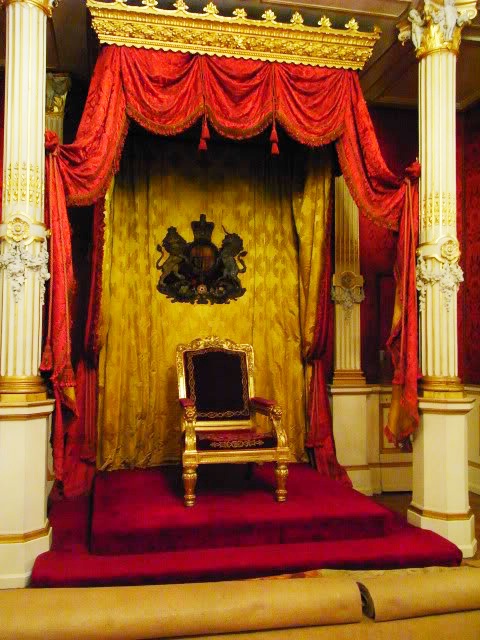
“On the loftiest throne in the world we are still sitting on our own rump.”

A reminder to let go of status, do as one would be done by and to live simply and well.

Courage

I’ve been working in the USA this week – same language, quite different working cultures. Still Brits talking to Americans is easy enough. But add Germans, South Africans, Sudanese, Cameroonians, Central African Republicans, French, Colombians, Turks, Japanese and Koreans – and an age range from 18 to 70 and you have plenty of difference to accommodate.

The very different people I was working with cared about very different things. They wanted to talk about different things and wanted to do different things. My job was to facilitate and find a collective conclusion. Enough to give me a thumping headache. But not this time. Why?

Usually on overseas work trips the combination of travel, missed sleep, wall-to-wall meetings, some sort of set piece event to speak at and produce an outcome from – plus lunch meetings and formal dinners – gives me a throbbing headache by 3pm on day one. It then goes on to throb the whole time I’m away. But this time, no headache. Why? Mainly thanks to an Aristotelian virtue – drawing my courage a little more from confidence than fear.

When I first read: “Courage is the mean between confidence and fear” it didn’t seem a particularly significant insight. My first thought was Aristotle was on about ‘courage’ in the sense of ‘fight or flight’ – there was after all a lot of fighting in ancient Greece. Given the clank of metal and the clash of swords is rarer these days, I didn’t think much about Aristotelian courage – one for the battlefield I thought. Who knows whether I’d stand and fight or run into a hail of bullets. Hopefully I’ll never find out. But the more I’ve thought about it, the more I see Aristotle’s point with ‘courage’ is as much about motivation as action.

I’ve come to realise that from school to university to the bigger world of work, I’ve used fear of failure as my prime motivation to perform. And it has always worked. Fear failure, worry the detail, think of what might go wrong, fire up the adrenaline, run flat out on intellectual broadband and the job gets done – and well. But at what cost? Stress, tiredness, raggedness, fraught, strung out and brittle.

So, thanks to Aristotle, once, a few months ago, when I started to feel the rising tide of anxiety and the throb of the vein in my head – the feeling of spotting and galvanising myself for another tough challenge – I stopped myself. I stopped myself from firing up my fear generator: what might go wrong, might I fail, what will people say, will I look like a duffer – and the killer: will someone say I did a bad job?

Instead I fumbled in my kitbag for something else – confidence. This could go well, I know how to do this sort of thing, I’ll be fine, who’s better than me to do this – and if someone says I did a bad job, so what, I’ll learn from it. The first few times I tried to do it I’d readily flip back to fear. I’d have to concentrate hard to find the courageous ‘golden mean’ with confidence. But with practice I’m learning how to plug in and stay more connected to confidence. And the courage to do new things with a smile flows from there.

As Aristotle said:

“We are what we repeatedly do. Excellence [arete in his words], then, is not an act, but a habit.”

To help me form the habit, I’ve started to think of Aristotle’s courage as a choice between two different forms of energy. One is red, electrical, crackling and spitting like lightning or charge sparking from a Tesla coil – fear. The other is blue, pure, unwavering like a beam of laser light – confidence.

Both work. Both help me get the job done. But the red form is hot, sparky, volatile and the toxic by-products pollute my environment. The blue form is cool, reliable and powers me with clean reusable, renewable and sustainable energy.

In the USA I was running on ‘blue energy’ – better mastering myself, enjoying the experience more, enjoying the different people, performing and getting the job done. No headaches, heartaches, worries or lost sleep. I came home quietly pleased, quietly satisfied and with a spot more confidence to draw on.

Day to day courage, like the battlefield kind, is the mean between confidence and fear. Developing Aristotelian virtue and excellence is simply developing good habits. And, I’ve come to realise, what is at stake, is developing the courage to live a confident happy life – not one haunted by the spectre of constant fears, real or imagined.
Self Control

Interesting to read in Wired that exercising self-control carries a cognitive penalty which makes you more likely to develop a ‘bad mood’ and lose it with someone else. As Wired has it:

In a series of clever studies, the Northwestern psychologists David Gal and Wendy Liu demonstrate that the exertion of self-control doesn’t just make it harder for us to contain our own anger – it also make us more interested in watching anger-themed movies, or thinking about anger-related information, or looking an angry facial expressions. In other words, acts of self-control haven’t just exhausted the ego – they actually seem to have pissed it off.

I used to often get spiky at the end of the working day. The waifs and strays who came to unburden themselves would often get a sharp-tongued salvo as I hiccupped some bile.

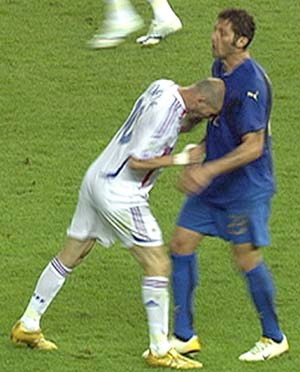
I always kind of admired Zinedine Zidane for head butting Materazzi in the World Cup finals in 2006. I could relate to it in a strange way. A bit of brain science suggests Zidane and I aren’t just occasionally spiky, like everyone else we just have finite reserves of self-control.

One more reason it’s good to keep in touch with those emotions. Too much self-control and you’re en route to head-butting someone.

Masterly Inaction

Along with its kissing cousin ‘benign neglect’, ‘masterly inaction’ was one of the useful survival tricks I learnt in the Civil Service. At least some of the impossible things you are asked to do get forgotten. Likewise, some of the huge problems you foresee are happily overtaken by ‘Events dear boy’.

But I always felt it was weak, passive and a sin of omission to indulge in masterly inaction. Having read my Primo Levi, and more recently visited and bourne witness to Auschwitz-Birkenau myself, the imagined sound of Alsatians barking and people standing by as great evil is perpetrated, haunt me. My omissions – especially when they potentially left people to get hurt – felt completely different in scale, but not completely different in kind.

‘Cynic’ was the school of Hellenic philosophy many senior Civil Service folk seemed to subscribe to. A sour worldliness, combined with acerbic wit, which allowed clever people to stand by and allow things they knew were wrong to pass them by. But perhaps more charitably they might have been ‘Skeptics’.

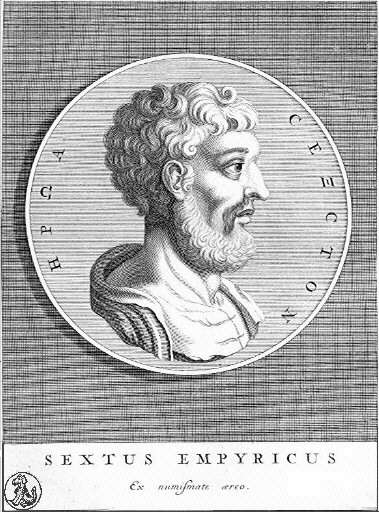
I’ve been reading this week about the Pyrrhonian Skeptics for whom the answer is not to jape or snipe, but simply to say ‘I know too little’ and ‘I do not know enough to judge’. Perhaps my judgements of those around me were too quick and too harsh.

Further back in my career, working in France, I had a piece of 360 degree feedback which sticks with me: “John could take a little more time making his decisions, which would save him time in justifying them”. That hurt. But it probably wasn’t wrong. I conflated leadership with decisiveness – two different things.

I read a while ago, that studies suggest, we should follow our gut, not our head, on things we have a lot of experience of. The corollary is we should have a good think, and get some facts and other views, before deciding on what we don’t know much about. The paradox is smart experienced people tend to do the opposite – think themselves out of their well-grounded judgements and over-confidently shoot from the hip when they know too little.

I’m not there yet, but perhaps I’m coming round to the view that ‘masterly inaction’ is not always a sin of omission. Sometimes as true sceptics would say, ‘I know too little’ and ‘I cannot judge’. So I conclude that to act may not always be the best course of action. However, appropriate ‘masterly inaction’ should not be framed by cynicism or cowardice, but by a healthy scepticism about one’s own capacity to make things better – and not inadvertently worse.

Dismal Science

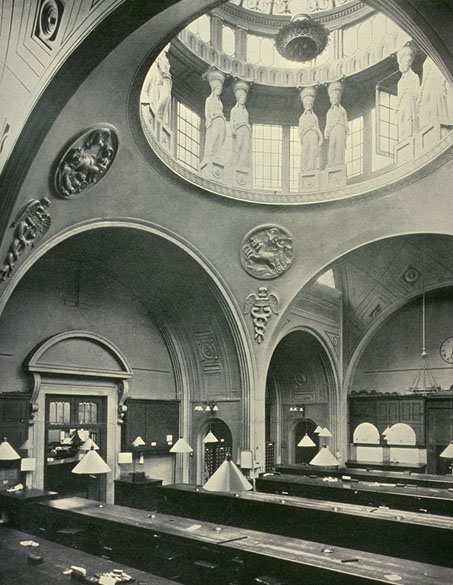
I attended an event this week in a bizarre location – Sir John Soane’s museum. Sir John rose to prominence in the 19th Century as a visionary architect and collector of antiquities and art. Most famously he designed the beautiful vaulted ‘counting rooms’ (pictured) for The Bank of England, where the first paper money was printed to pay for the Napoleonic Wars. More of printing money anon.

Sir John also decided his children would be architects and his children’s children would be architects. Thereby the science of architecture would be brought to a peak of perfection within a matter of a few generation of Soanes. It didn’t quite work out that way. 

His son went to prison for fraud, had children with his inappropriate wife and then even more inappropriately had some with her sister. He also wrote a thinly disguised satirical attack on his father in a contemporary journal which on reading provoked his mother to take to her bed and expire. A lesson to us all – our children may achieve many things in life, but they are unlikely to do our bidding.

The conversation piece for the evening was what can business and policy makers do to help the UK economy grow by an extra 1%. On a £1 trillion annual UK turnover and with the power of compound interest, over time, that would make us all better off by an unfathomably large number of billions of pounds. Seems like a good idea. But ultimately I came away feeling 1) we don’t really know how to turn a macro idea into the micro reality 2) even if we did, what would ‘go under the wheels’ of ‘concentration’ and competitiveness in the process. 

I’m no socialist, but the words fairness or equality didn’t feature once, nor did wellbeing, happiness or sustainability. Of course economists will tell you they are all ‘priced in’ in the cash value we place on things. But all economists also know that much of what we value in social and cultural value is missed by the ‘dismal science’.

As I texted my other half on the way home:

All very worthy, abstract macro-economics and a list of things for government to do. When will these people learn that money ain’t the only measure that matters and government is clueless and incompetent in managing it anyway. Viva culture and social ties, they are our only and best hope.

Yesterday’s flattening of Japan under a wall of water shakes the myth of our invulnerability like a Tokyo office block. The smoke and the more lethal invisible cloud spreading from a crippled nuclear plant today serves as a reminder of our hubris. 

Humanity clings to the planet in interdependent and fragile ways. If we make our big choices for the future on 1%s of £trillions I fear we’re missing the point. Much like Sir John Soane’s project to perfect architecture – ‘events’ and what matters to real people have a habit of getting in the way of the best laid plans.