Playing to win

I’ve been thinking recently about how to ‘be’ at work. Not everything – or everyone – is easy to get along with. Working life has many pressures and frustrations. I’ve often worked too long or too hard in my working life and sometimes got cross, spiky and brittle because of it. So looking after myself better has been part of learning to survive in bigger jobs. But surviving isn’t good enough. Thriving is what I’m after.

One potential solution to overstretch and indignity is Stoicism. It’s certainly better than ‘passive aggression’, or another past favourite of mine ‘victim behaviour’. Stoicism gives you a handy detachment and a heightened ability to endure and ‘not take things personally’. That’s a good ingredient to have in my mix, but it’s not in itself very attractive – enduring is not leading.

So how about ‘attracting’. On my better days I can definitely attract people with concepts and ideas. On my very best days I can stir a bit of passion too. But mostly I’ve been reticent to put myself at the centre of situations or ‘put my chair in the centre of the room’ as a friend of mine puts it. Partly this is fear of everyone looking at me. Partly this is the fear of friends ‘jeering’. Not much of my attraction to attraction is narcissism, but I do like to be liked.

I was reading bits of the Illiad and Odyssey last night and seeing what Achilles would have done. Achilles is the ultimate action hero. In modern managementspeak he’d be a strong ‘shaper’ and ‘personal performer’. He was passionate and incredibly driven, but he was also selfish, undermining and reckless. He was playing for himself not for the team. But he was a hero and he did make and change history.

As Odysseus said to the ghost of Achilles when he encountered him in Hades:

“There is not a man in the world more blessed than you – there never has been, never will be one. Time was, when you were alive, we honoured you as a god, and now down here I see you lord it over the dead in all your power. So grieve no more at dying, great Achilles.”

But in return Achilles protested:

“No winning words about death to me, shining Odysseus! By god, I’d rather slave on earth for another man – some dirt-poor tenant farmer who scrapes to keep alive – than rule down here over all the breathless dead.”

Achilles was a great talent, but he played for himself. He burned brightly, briefly. Then he was spent, and died carrying regret. Had he been a Stoic he would never have risen to the anger and fury which propelled him into history. But would he have been more contented in Hades had he stuck around and achieved more with – and for – others?

I will read more about Odysseus – or Ulysees. On first glance, he has a winning combination of courage, guile, teamwork and sustained leadership under pressure. He played to win for the team and the cause, not just for himself.

I re-read a useful piece of research today, which concluded:

“Leaders would do well to use the energy they have to attract people to the vision and purpose of the organisation, rather than themselves. The challenge is to have the organisation’s purpose ‘in your bones’.”

This crystallises the advice I’ve been following recently to consciously put the organisation’s “cause” at the heart of my choices and narrative. I’ve already found it gives me more courage and conviction to do the right things.

‘Playing to win’ means not being reckless, selfish, impatient, kamikaze, intemperate, self-indulgent, defensive or fearful. It means constantly re-focusing myself and those around me on doing better what everyone who works here – on our best days – believes in.

Why? Because what we do really does change people’s lives. And what I do has and can change the organisation greatly. So unlike Achilles, I should use that power for good not for myself.
Adjacent Possible

I read recently that all successful innovation expands into the ‘adjacent possible’. Whether it’s spines becoming feathers, swords becoming ploughshares or mobiles becoming smartphones, successful innovation depends on adapting technology to expand into an adjacent – and sometimes very different niche.

It’s also a useful metaphor for work and life. It’s a dangerous business trying to change everything all at once or trying to leap from one paradigm to a completely different one. I worked for two organisations which set out to change their whole market in the 1990s. In one we got it right, by applying an ‘adjacent’ idea from the restaurant business to mobile phones. The other had exactly the right strategy – cloud computing – just ten years too early. That organisation largely destroyed itself trying to create a new ‘non-adjacent’ future before people or the technology were ready.

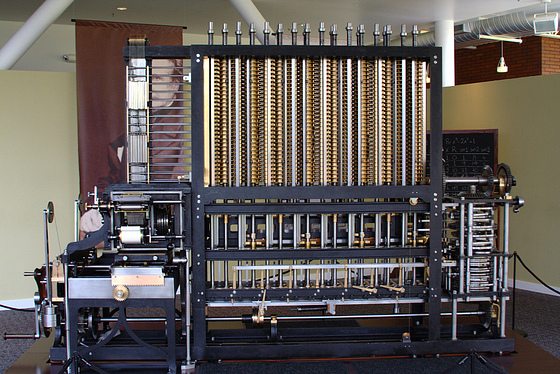
Charles Babbage’s Victorian computer was way before it’s time. But despite its potential people stayed wedded to the steam age. A friend told me in ancient Alexandria an inventor allegedly created a tiny table top steam engine, but considered it a mere curiosity – who needs steam power when you have slave labour.

So what of the iPad? Steve Jobs famously failed with the Apple Newton: too big, too slow, too expensive, no market. I bought an iPad in September more out of a sense of duty than belief. I wasn’t sure I needed one, but discovered I more or less do. For me the most amazing ‘adjacent possible’ that lies latent in the iPad is the ability to span all ages. My pre-school son can use it happily and so can his grandmother. We bought my parents an iPad for Christmas and she is now sending email.

Seizing the ‘adjacent possible’ doesn’t necessarily mean incrementalism – there are huge advances to be made by looking at the opportunity next door or putting familiar ideas and capabilities in new configurations. I learnt some years after applying ‘set menus’ to mobile phones that there is a well established marketing creativity trick called ‘related worlds’; namely, looking for new product ideas and inspiration in other sectors. As I emailed back to my mum this morning, she has leapt from the computing stone age to the 21st century in one graceful bound. She’s surfing the web and connected for the first time in her life – thanks to the re-imagined and simplified interface of iPad.

‘Think different’ was Apple’s strapline in the 1990s. It’s good advice. Neither a big phone nor a small computer, iPad is less than either. But it is more than both combined in getting my mum online. Hats off to Steve Jobs – he’s not ‘man of the year’ for nothing.

As soon as iPad became adjacent Steve Jobs made it possible and created new adjacent possibilities for millions of people. I’m writing on one now.

Weird

If every person is valuable and every person is different, then trying to understand one another is both important and hard. Important because everyone’s point of view matters, hard because though we’re all wired the same, everyone’s inputs – in terms of experiences – are different. And not just our specific experiences, but also the collective norms or culture we absorb.

So I was surprised to read in the New Scientist that people like me are the oddballs internationally, not the norm. The acronym WEIRD, stands for Western, Educated, Industrialised, Rich, Democratic, and being WEIRD certainly makes you odd by world standards.

Whilst I’m persuaded that the Ancient Greeks still have plenty to tell us on how to live our lives, you have to admit they are a bit off beam on facts and evidence sometimes. Aristotle is unmatched on ethics and a painstaking collector of evidence on nature to match Darwin. But some of his conclusions which blend observation and assumption on, for example, physiognomy don’t pass muster in this era of evidence based psychology. For example:

“He that hath but a little beard, is for the most part proud, pining, peevish and unsociable… Great and thick ears are a certain sign of a foolish person, or a bad memory and worse understanding. But small and thin ears show a person to be of a good wit, grave, sweet, thrifty, modest, resolute, of a good memory, and one willing to serve his friend.”

Having examined my ears thoroughly I’m going to forgive myself for developing some theories which experiment and evidence may subsequently prove wrong.

What interested me the most in the studies on WEIRDness was the finding that an ‘egocentric’, highly individualistic, analytic and reductionist worldview is unusual. Talking to a friend today, we concluded it probably started with the Greeks, via Ptolemy and the Enlightenment.

Much of the world is on the contrary holistic, collectivist and allocentric – i.e. orientates by reference to objects in the world instead of describing the world by reference to our place in it. 

Much of this I’m sure is due to the removal of nature from our industrialised lives. But as I said to someone at work today, with India and China rising to global leadership, more of what makes the world turn in future won’t have WEIRDness driving it. Or will it?

Smiling

Against the grain today I put on a smiling face. In so doing I added measurably to the sum of human happiness. So simple, yet sometimes so hard. Why don’t we all do it more?

I can’t take all the credit. I was kickstarted by two people – one I know well, one I don’t. After a shirty start and shouting at each other, my son and I made it to nursery on a cold, grey, damp morning. He was glum, I was in a bit of a rush. As I turned to leave he asked for a cuddle and I knelt down and gave him a big all body hug. We smiled. He was ok, I was ok. The cascade of smiles began. 

I smiled at my daughter in the schoolyard and at the teachers who smiled back. I chose a smiley stripy shirt for work and then whistled Christmas tunes through the drizzle on my bike in. I went to buy a coffee and as I waited the friendly young foreigner behind the counter gave me a winning smile and asked me how I was. It was such a winning smile, I gave him a winning smile back and exchanged jovial small talk about the coming snow and all the customers and servers joined in. We all smiled.

I walked round the corner to work whistling ‘Walking in a winter wonderland’. Once in the office I smiled at the security guards and receptionists and walked past the lifts to the seven flights of stairs I hack up every morning. I decided to whistle ‘Walking in a winter wonderland’ as I climbed the stairs to see if I could a) not be embarrassed or cowed by reproachful looks into glumness and b) get a smile out of the random selection of people I might pass.

Tricky start. First up I bumped into a chap who hasn’t made eye contact with me for 6 weeks since my new organisational strategy consigned his section and personal passion to frozen assets and deep cuts. He’s furious with me, and how ever much I’ve tried he won’t acknowledge me if we pass in the building. The whistling got him though. He looked, I captured his curious and unsuspecting gaze and flashed him a winning smile and a cheery salutation. He couldn’t resist smiling back and finally saying hello.

Next I whistled past another urgent faced, rushing, anxious looking senior colleague. He was equally surprised and switched from frowning to smiling. I passed another person I don’t know who also by the alchemy of Christmas went from neutral to smiling within nine whistled notes ‘Walk-ing in a win-ter won-der-land’. 

By the fourth flight of stairs my whistling was getting a bit uneven as I ran out of breath. By the fifth I gave up. On the sixth I bumped into another colleague and told him what I’d been up to. He was both bemused and amused. But it got him smiling. Onto the seventh flight and into my office and I was full of good cheer. The day started well, I performed well, did some important things and remained cheerful throughout. 

I ended the day with a woman I work with who can be challenging and confrontational. She is also a person of genuine conviction and intelligence. We were on the topic of making an impact and being true to yourself whilst speaking the truth to power. I told her that whilst being far from the finished product myself on this, sometimes a lot hinges on how you decide to ‘be’. If you decide to be high energy you can bring energy, if you decide to be aggressive you can scare people, if you decide to be warm you can attract, if you decide to be cold you can chill. 

We are all affected by how others are ‘being’ too but to some degree we have a choice about how we are. She had been open, supportive, thoughtful and measured when we met in an important meeting earlier in the day. She had got much of what she wanted without confrontation or a furrowed brow. As I said to her, when I was asked, my main memory of her in the meeting was relaxed and open with a smooth forehead, high eyebrows and a smile. We had all warmed to her. Maybe I had helped a little as I gave her a big encouraging smile when she came in the room.

If so, it had all started with a big hug from a small boy and a smile from a complete stranger. Smiling, it’s powerful stuff.

Indignity

Life is full of indignities, small and large. I, like most people, am easily persuaded that life’s indignities have been targeted at me by some malign intent. Human beings are programmed to look for causation. It’s a key survival skill. The moment you move beyond blind instinct, learning from your mistakes and finding patterns and causes is vital. 

It is said that the first religions – pan theistic, animist and shamanic all came from the need for hunter-gatherers and early nomads to find some answer, or cause, for the indignities of storm, drought, disease and death that pre-scientific man had no other method to understand or intellectually control.

These gods brought good, but more often bad. They were quixotic and quick to anger and required regular appeasement and speaking in tongues to commune with and placate. 

Ancient philosophers were not immune to the gods whims. They always paid them homage. But they tended to live in temperate latitudes – comparatively benign environments – which left some time for building civilisations and thinking. 

I’ve recently started reading Epictetus, a famous stoic philosopher from the 2nd century AD. It seems to me he offers a window into an interesting period between ancient philosophy and organised monotheistic congregational religion. 

I’ve not read enough to be sure, but my Bayesian brain guesses that his stoicism is a response to the superficially civilised but dangerously unpredictable indignities of Roman society – from slavery to summary justice.

His stoic answer seems to be to develop a detachment which has much to commend it in ‘coping with the loss of an earthenware pot’ or being ‘splashed and jostled at the bathhouse’. But inviting us to train ourselves to ‘feel nothing’ at the loss of a wife or child (as they are human and death is inevitable) feels plain wrong. For Epictetus the sole true value is our moral character. And all else – including people – are as Oliver Reed said in Gladiator simply ‘shadows and dust’.

I like Epictetus’s advice to recognise what you control and don’t, what you assume and what is real, what is intended and what is accident. His tip to take a moment to reflect before reacting is wise too. But I’m with Aristotle not Epictetus on people we love and the importance of friends.

One such sent me a piece of research which suggests that the value of friendship doesn’t just underpin Aristotle’s vision of happiness, but also the happiness that organised religions bring:

“It is the social aspects of religion rather than theology or spirituality that leads to life satisfaction,” according to sociologist Chaeyoon Lim of the University of Wisconsin-Madison. “Friendships built in religious congregations are the secret ingredient in religion that makes people happier” his study shows.

So I go with Aristotle and the big congregational religions, not Epictetus on friends. Friends and social ties are the route to human happiness and eudaimonia. Avoiding them isn’t. 

You can’t control friends. As Epictetus rightly points out ‘the jeering of friends’ often accompanies any attempt at self improvement. There’s no doubt that friends can hurt you, and heap indignity on you too. But you can’t live happily without Friends.