War and Peace


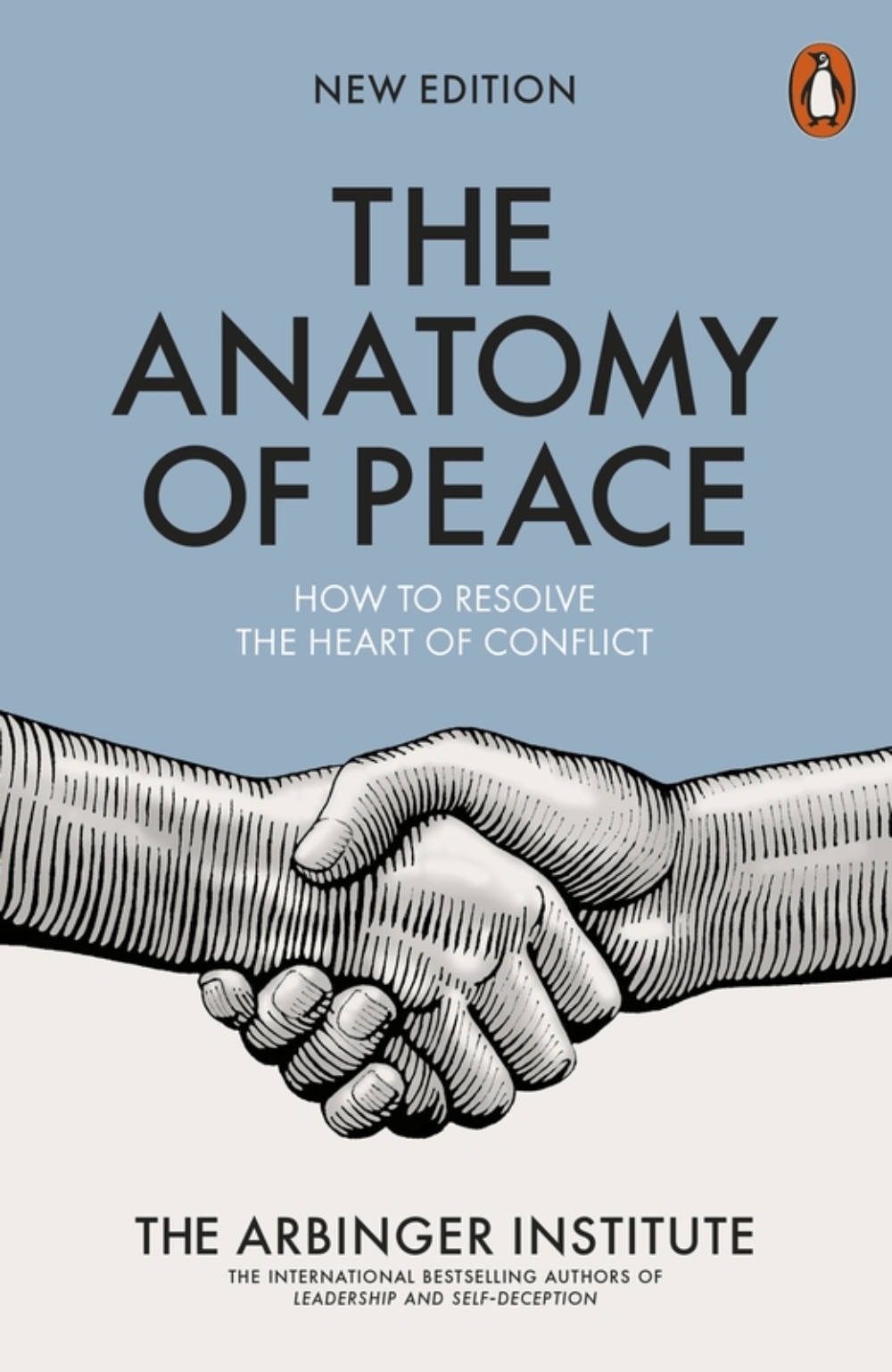
Two good books came to my aid this week – ‘Fierce Conversations’ and ‘The Anatomy of Peace’.

The first argues persuasively that there isn’t a relationship you can’t improve (or set back) with your next conversation. 

The thesis is that the conversation is the relationship – and you’re relationship only as good as the conversation you’re having. Stop talking and your relationship is automatically going backwards; start talking and you’re in with a shout of improving things.

The further argument is; some conversations need having – even if you really don’t want to have them. I had one like that this week. 

The second book ‘Anatomy of Peace’ and the related ‘Outward Mindset’ are very simple too. But being simple doesn’t make them easy. These say that what’s happening around us (and to us) is often far more of our own making than any of us would like to recognise. 

The thesis of both: is that the essence of what we create around us flows from whether we are seeing and treating people as people. Most of our problems are caused by our heart subtly and quietly hardening against people – and consequently seeing individuals and groups (even whole countries) as obstacles or vehicles. 

Stop seeing the person, or start focusing more on your own needs – and we start the self-reinforcing process of pushing, shoving and self-justification.

This week I stopped pushing on the cusp of starting shoving, and had a frank and open ‘fierce conversation’ instead. An important work relationship is improved; I’m much happier and a whole slew of future problems feel suddenly more tractable – we will tackle them together not push them at each other.

Going to war with people is always easier than making peace; but the consequences rip and ripple out, and are endless either way. 

Separately, coming somewhat ‘shell shocked’ from a downbeat meeting on problems with a major building project, someone kindly asked if was alright. I stopped a moment and said: “Yes, I was quiet because I was thinking.” A white lie, but partially true.

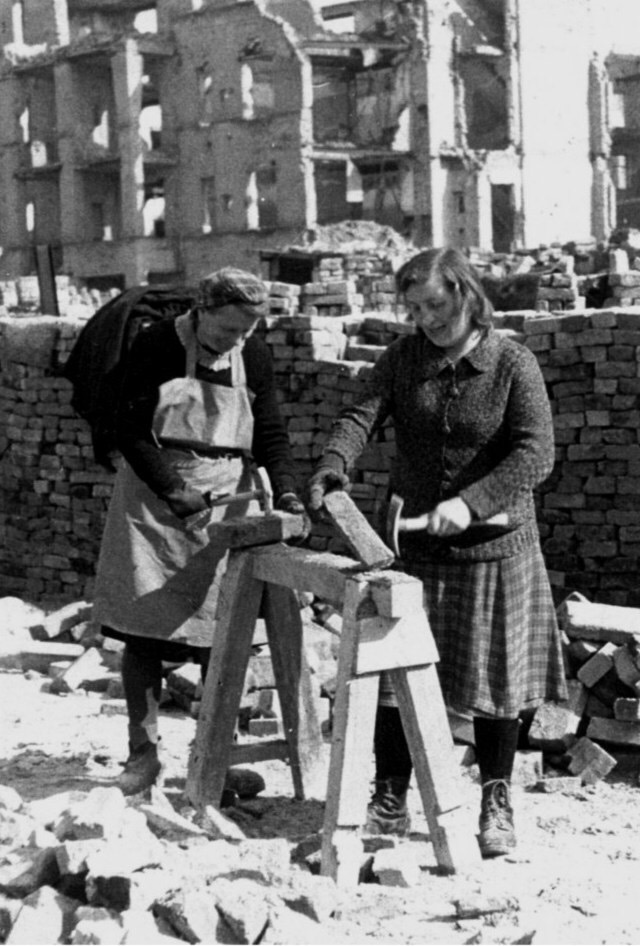
And then I mentioned the stoicism of Germany’s ‘brick women’ after WWII whom I’d read about in Neil MacGregor’s Germany: Memories of a Nation’

As Wikipedia has it, the Trümmerfrau (literally ruins woman or rubble woman) helped clear and reconstruct bombed cities where 4 million homes had been destroyed and another 4 million damaged – half of all homes – plus half of all schools and 40% of all infrastructure; they collectively tackled 400 million cubic metres of ruins.

Puts a few of my work ‘infrastructure problems’ in perspective. But it also speaks to the power of people to objectify, justify, hate, fight and destroy each other – and very often the same people to come together in a testament to the indomitable human spirit: to restore, recover, rebuild and recreate. 

We have the capacity for both in us all.
Nostalgia

img_1923

Turns out Nostalgia ain’t what it used to be…

Traditionally associated with wallowing in a rose or even sepia-tinted past; nostalgia has a bad reputation for losing us in misty-eyed escapism to a lost time that never really was.

I’ve always believed nostalgia was a thing to avoid; at best a source of melancholy and at worst downright sadness. But not so according to the New Scientist:

First described by Johannes Hofer in 1688, the word nostalgia comes from the Greek nostros, to return home, and algos, meaning pain. Hofer observed it as a disorder of homesick Swiss mercenaries stationed in Italy and France… a disease which whose symptoms included weeping, fainting, fever and heart palpitations. He advised treatment with laxatives, narcotics, bloodletting or if nothing else worked sending the soldiers home.

As recently as 1938 the New Scientist continues:

It was described in the British Journal of Psychiatry as “immigrant psychosis”: a condition marked by a combination of homesickness, exhaustion and loneliness.

However, in the last two decades nostalgia has been recognised as an emotion found in all cultures; a mix of happiness and longing. Its bittersweet nature is apparently “unique but universal” – and most of us experience it at least once a week!

Why?

One theory the New Scientist offers is that nostalgia gives us a sense of continuity in life: “Nostalgia reminds us we are the same person we were on our seventh birthday party as on our wedding day and at our retirement celebration.” 

It turns out nostalgia is an antidote to loneliness; not its cause. It lifts us when we are feeling down and boosts well-being. 

And it helps you cope… less nostalgic people feel less connected to others, that life has less meaning, are less likely to seek help from others and deal with loneliness less effectively.

Whereas: “reflecting on nostalgic memories boosts optimism and leaves people more inspired to pursue their goals.” Wow! What’s not to like?

Music is a particularly effective summoner of nostalgia by all accounts (explains my blog about Teddy Mac, Alzheimer’s and Sinatra’s: “You make me feel so good”).

So yesterday I tuned into Absolute 80s on the radio for some teenage kicks, and sent my folks some BFI black and white archive videos of our home town. I used to think that sort of thing might drive them to melancholy; not now.

I’m embracing and prescribing a regular dose of nostalgia – rose tinted spectacles all round!

History

The horrors of the 1930s and 40s seem far more than a lifetime away. But they aren’t. Accompanied by the flicker of black and white, the terrifying demagogues of the 20th century now seem like exaggerated fiction. But they weren’t.

In his Ethics, Dietrich Bonhoeffer describes the era:

“Rarely perhaps has any generation shown so little interest in any kind of theoretical or systematic ethics. The academic question of a system of ethics seems to be of all questions the most superfluous. 

The reason for this is not to be sought in any supposed ethical indifference on the part of our period. On the contrary it arises from the fact that our period, more than any earlier period in the history of the west, is oppressed by a superabounding reality of concrete ethical problems. 

It was otherwise when the established orders of life were still so stable as to leave room for no more than minor sins of human weakness, sins which generally remained hidden, and when the criminal was removed as abnormal from the horrified or pitying gaze of society. In these conditions ethics could be an interesting theoretical problem.

Today there are once more villains and saints, and they are not hidden from the public view. Instead of the uniform greyness of the rainy day we now have the black storm-cloud and the brilliant lightning flash. The outlines stand out with exaggerated sharpness. Reality lays itself bare. Shakespeare’s characters walk in our midst.”

But lest we be complacent about a world which seems long gone, a few pages later Bonhoeffer describes the nature of the tyrant:

“For the tyrannical despiser of men, popularity is the token of the highest love of mankind. His secret profound mistrust for all human beings he conceals behind words stolen from a true community. 

In the presence of a crowd he professes to be one of their number, and at the same time he sings his own praises with the most revolting vanity and scorns the rights of every individual. 

He thinks people stupid and they become stupid. He thinks them weak, and they become weak. He thinks them criminal and they become criminal. His most sacred earnestness is a frivolous game. His hearty and worthy solicitude is the most impudent cynicism. 

In his profound contempt for his fellow-men he seeks the favour of those he despises, and the more he does so the more certainly he promotes the deification of his own person by the mob.”

Chilling. As it was, so it threatens to be again; history has a bad habit of repeating itself if we don’t learn from it.

Peace in our times


The Anatomy of Peace’ sounds a heavy read; and the fact it comes from the cultlike-sounding  ‘Arbinger Institute’ put me a little on edge… But I’d promised someone I’d buy it, so I did.

In essence it’s a simple thesis: 

1) We all spend far more of our time tackling things that are going wrong, than doing things to make them go better.

2) When people: co-workers, children, family members etc, resist our attempts to correct them, we combine increased coerciveness with talking them down – first in our heads, then increasingly out loud.

3) Once we start to coerce people and start talking them down, three things happen: 

a) they resist us all the more;

b) we demonise them in our minds and with other people to justify ourselves and our actions;

c) we increase our attempts to coerce them and talk them down further.

This focus on correcting, and the cycle of attempted coercion, self-justification, resistance, demonising and a hardening heart is everywhere, all around and at all levels – all the way up to nation states.

Heavy stuff.

What to do? There’s plenty that’s common-sense: listen more, build enabling relationships etc. But it all starts with the heart and stopping yourself getting into – and learning how to get out of – the downward cycle of correcting, coercing, hot and cold conflict and going to interpersonal war. 

I’ve tackled three difficult work situations with these new techniques this week; pitched battles, either in full-blown standoff or seething with cold professional anger. 

Tricky stuff. But acknowledging people as just that: flawed, frightened, angry and frequently frustrating; but first and foremost people, is the trick to developing a ‘heart at peace’ in the Arbinger jargon. 

And who doesn’t want a workplace, a home and a heart at peace? 

Empathy, Pain and Compassion

New Scientist (11 May 2016) – How sharing can make you sick
Something I’ve done a lot in the last decade is empathy. Indeed it has become one of the things I do the most at work: connecting with people and quite literally ‘feeling their pain’.

Walk a mile in another person’s shoes and you see the world differently; better understand different opinions and why people do what they do – even when it seems to be hurting both them and you.

But it comes at a cost. Connecting with the pain of others is painful for me too. It hurts to see someone hurting; and even more if you go with them to the very source of their pain – deep fears, anxiety, sadness and loneliness.

And this is a problem, because once you’ve seen the contents of someone’s soul, you can’t just shrug and say: “Oh dear, how sad, never mind.”

Not least because neuroscience is proving that our own brain copies the pain and suffering of others when we empathise. We do literally ‘feel their pain’ when we listen and put ourselves in their place. Mirror neurones fire in sympathy – in exactly the same pattern as in the sufferer; and the suffering is shared.

So I was fascinated to read in the New Scientist (in the article pictured above), that we should consider cutting the empathy; and boosting our compassion instead.

What’s the difference? I’m not sure I exactly know – but I can ‘feel’ the difference… Empathy feels like touching a person and connecting directly with their emotions – literally feeling what they are feeling. The science says that’s also what’s happening in your brain.

The problem is that in sharing, experiencing and absorbing the pain of others, we lessen our own reserves of optimism, energy and resilience. And that means ultimately we are less able to summon the strength to help or improve anything. Empathy feels draining.

Compassion feels different. Compassion ‘connects’ like empathy does but instead of firing the pain-mimicking mirror neurones, compassion digs deeper: for warmth, care, appreciation and common humanity. 

I reckon this must be how the Pope, aid workers and others who have the suffering of hundreds, even thousands of people thrust upon them daily must cope. Not by directly empathising; but by digging deeper for compassion. Certainly it’s the Dalai Lama’s philosophy.

One thing’s for sure I haven’t cracked it yet. Now I know it, I can feel the difference – beleaguered by too much empathy; strangely strengthened by tapping into warmth and compassion.

But I can’t manage compassion confidently yet; I still want to say at the end of sad conversations “I feel you pain.” But I know now that’s the invitation and trigger to fire those mirror neurones, and carry away my share of another’s suffering.

Talking to a very smart work colleague about it this week, we concluded: if a person is in a deep dark hole, you’re not always helping them that much, if you just jump in next to them. 

Similarly if you do try to feel another person’s pain and offer the classic line “I know how you feel” you risk real failing yourself and the person you’re talking to – how can you really know how someone feels? 

When someone is in a dark place this week’s realisation is the answer isn’t necessarily to join them in the gloom. Compassion – if I can learn how to channel it – creates the same connection, but offers a better chance of staying happy and healthy; and being some help.