I was talking this week about ‘chucking some random numbers’ at my career; which I think some people listening thought might be bit reckless.
But in fact what I have in mind is well grounded in computer science.
A pseudorandomly generated bitmap – Wikipedia
Going back and listening again to ‘Algorithms to live by’ out walking the dog today, I was reminded that there are excellent design, creativity and evolutionary reasons to ‘chuck in’ a bit of randomness…
After all, life is all about optimisation.
Being randomly jittered, thrown out of the frame and focused on a larger scale, provides a way to leave what might be locally good and get back to the pursuit of what might be globally optimal.
But there are (and should be) limits:
The cult classic 1971 novel The Dice Man by Luke Rhinehart (real name: George Cockcroft) provides a cautionary tale. Its narrator, a man who replaces decision-making with dice rolling, quickly ends up in situations that most of us would probably like to avoid.
I remember flirting with The Dice Man in the 1990s – and it’s a young man’s game… Later on in life there’s much more at stake.
But maybe it’s more about how, and how much:
If the Dice Man had only had a deeper grasp of computer science, he’d have had some guidance.
‘Algorithms’ says there are three golden rules; first, from ‘Hill Climbing‘:
Even if you’re in the habit of sometimes acting on bad ideas, you should always act on good ones.
Second from the ‘Metropolis Algorithm’:
Your likelihood of following a bad idea should be inversely proportional to how bad an idea it is.
You should front-load randomness, rapidly cooling out of a totally random state, using ever less and less randomness as time goes on, lingering longest as you approach freezing. Temper yourself—literally.
And that’s that the original Dice Man did too:
Cockcroft himself apparently turned, not unlike his protagonist, to “dicing” for a time in his life, living nomadically with his family on a Mediterranean sailboat, in a kind of Brownian slow motion.
At some point, however, his annealing schedule cooled off: he settled down comfortably into a local maximum, on a lake in upstate New York.
Sometimes you need to know when you’re in a good place:
Now in his eighties, he’s still contentedly there. “Once you got somewhere you were happy,” he told the Guardian, “you’d be stupid to shake it up any further.”
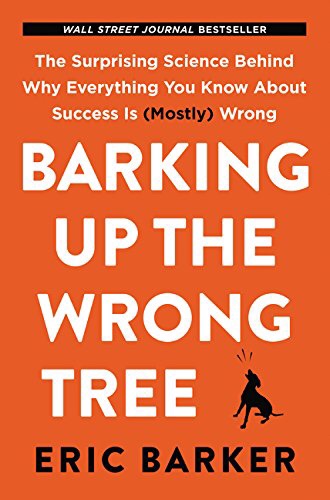
Here’s to Eric Barker, who more than once has put me on a better track. His weekly writings are well worth signing up for here in my humble opinion.
He’s given me a handy reminder that apart from anything else, there are good mental health reasons for writing stuff down:
We ruminate endlessly but that just makes things worse. When you’re merely thinking about your problems, you hop, skip and jump all over the place, never resolving one issue before moving on to the next. Writing forces us to put a structure around life. To make sense of it.
And it’s not just about venting:
The effects were not due to simple catharsis or the venting of pent-up emotions. In fact, the people who just blew off steam by venting their feelings without any thoughtful analysis tended to fare worse…Talking or writing about the source of our problems without self-reflection merely adds to our distress…
Writing is about codifying and coming to a deeper understanding…
The authors asked students to write about their thoughts and feelings about their lives. Those who showed more deep-level thinking along with constructive problem solving were less depressed later and had fewer health care visits. Those students who merely expressed their emotions and described their anxiety had more health care visits…
A large number of good scientific studies conclude that the mere expression of emotion is usually not beneficial on its own. Rather, people typically must learn to recognize and identify their emotional reactions to events.
In effect:
Once you understand something, once you can find a place for it in the story of your life, that’s when you can put it behind you and move on.
And, that’s just one of the many reasons it seems to me (and to science) that regular writing is so important…
Here’s where the some of the science comes from:
More than thirty years ago there was a guy named Jamie, his marriage was in the toilet, and he was utterly depressed. Despite having big problems, he didn’t go to a therapist. (Which is ironic because Jamie was a graduate student in psychology, of all things.)
Instead he started writing. A lot. He wrote about his marriage, his career, his childhood. He basically covered every serious issue in his life and how he felt about it. And then something happened… He felt better. A lot better. And he realized how much his wife meant to him. They resolved their issues. Then he had a thought:
“Maybe writing might help anyone feel better about their struggles in life.”
And being a psychology grad student, he did a study to test the theory… And he was right. Since that first paper was published in 1986 hundreds of other studies have shown the power of expressive writing to help people. In the thirty-plus years since, many students on the University of Texas at Austin campus have come up to Professor James Pennebaker and said:
“You don’t remember me, but I was in your experiment a year ago. I just wanted to thank you. It changed my life.”
James Pennebaker is the Regents Centennial Professor of Psychology at the University of Texas at Austin.
I’ve not been enjoying work recently; but it could be worse…
Here are some stats on how the rest of the British workforce feels about the daily grind:
According to research by YouGov, 37% of working British adults say their job is not making a meaningful contribution to the world. Half (50%) say their job is meaningful, and 13% are unsure.
At least I get over this hurdle. Stuff I do, and make possible, does make a difference to thousands of people; and potentially to many many more. I tick this box.
Men (42%) are more likely to say their jobs are meaningless than women (32%).
In a week where we learned men are invariably better paid, why are men more gloomy? The hormones we have, the expectations society sets or the jobs we disproportionately do?
Whatever the causes, I’m on the right side of this one too.
Despite this, most people with ‘meaningless’ jobs say it’s unlikely they will change jobs in the next 12 months (53%, compared to 35% who say they might change jobs).
I’m in the 35% here. Never say never, I say…
I’ve moved sectors, countries and jobs plenty of times; so although the grass is usually no greener, it always pays to keep your feelers out – if only to feel you have options and skills people want.
The survey also asked if British workers find their jobs personally fulfilling, and a similar portion (33%) say they do not. 63% say their job is fulfilling, although only 18% say it is very fulfilling.
I scrape into the 63% here – my work is not very fulfilling, nor does it feel like the very best use of who I am and the skills I have; but hey you have to get over yourself a bit don’t you. As my son once famously said “it’s not all about you Dad.” Cheeky monkey.
As for explaining myself to others…
Many introductions at social occasions begin with a conversation about work, but only 49% of British workers say they’d be proud to tell someone about what they do when meeting for the first time. 8% say they’d even be embarrassed, 41% say neither.
…I usually start embarrassed but end up more proud. Education is the Lord’s work; even if academia can be a fractious and frustrating place.
Compared to many, I’ve not got that much to complain about. It helps to be reminded of that by the travails of others.


 Nathaniel Hawthorne





 Achilles & Aristotle