Fridge Frees

20120811-213902.jpg

Proof, if ever it were needed, that Csikszentmihalyi’s ‘flow’ can be found in any – and I mean any – activity. This morning at 7.45am, I began chucking some veg and old bottles of chilli out of the fridge…

…Two hours later the entire fridge, glass shelves, drawers and door storage sparkle clean as a whistle; for the first time in over five years.

What possessed me? A combination of ‘homo faber’ (Hannah Arendt’s thesis that man needs to work) and ‘flow’ any task done with focus and intensity brings absorption and satisfaction.

Positive feedback from my astonished ‘other half’ helped too. Amazing what a week off work does for you – plus a brief respite from the kids.

As I said to the missus last week, I sometimes have an uncontrollable urge to take some autonomous action, to get on and do something – anything. Hannah Arendt explains why:

“Men are free…as long as they act, neither before nor after; for to be free and to act are the same.”

A fridge frees.

Take me to your Leader

20120810-214912.jpg

As the Curiosity rover pulled off an improbably complex landing on Mars, I was having a laugh with a friend in the US. I pointed out that it’s the US President’s duty to welcome any extraterrestrial when and if he/she arrives. As I put it to her:

It’s America’s job to have any alien invasion land there. And your job to extend the hand of friendship, attempt to nuke em and then use geek ingenuity to whoop ET’s sorry ass. These are important tests of the CinC plus would you have a beer with him/her.

But as Montaigne wrote 50 years after the discovery of the New World, Europeans did a pretty lousy job of ‘constructive engagement’ when they landed in the Americas:

We have taken advantage of their ignorance and inexperience, with greater ease to incline them to treachery, luxury, avarice, and towards all sorts of inhumanity and cruelty, by the pattern and example of our manners.

So many cities levelled with the ground, so many nations exterminated, so many millions of people fallen by the edge of the sword, and the richest and most beautiful part of the world turned upside down, for the traffic of pearl and pepper?

Montaigne reckons the Ancients would have done it better:

Why did not so noble a conquest fall under Alexander, or the ancient Greeks and Romans; and so great a revolution and mutation of so many empires and nations, fall into hands that would have gently levelled, rooted up, and made plain and smooth whatever was rough and savage amongst them.

And that would have cherished and propagated the good seeds that nature had there produced; mixing not only with the culture of land and the ornament of cities, the arts of this part of the world, in what was necessary, but also the Greek and Roman virtues, with those that were original of the country?

I’m not so sure that ‘up close and personal’ the Greeks and Romans would’ve been quite that benign. But who knows.

A question arises. Having spent the week with my two kids arguing incessantly about fairness and equality, at what point do we give that up and go for dominance, acquisition and accumulation?

Lord Acton the Victorian historian, politician and moralist had a few ideas:

“Power tends to corrupt, and absolute power corrupts absolutely.

“Great men are almost always bad men.”

“There is no worse heresy than that the office sanctifies the holder of it.”

And with remarkable prescience:

“The issue which has swept down the centuries and which will have to be fought sooner or later is the people versus the banks.”

Plus ça change…

Noble Purpose

20120807-083159.jpg

The Olympics bring out my mixed feelings about competition. Winning at all costs, grinding someone else in the dust, the distortion of personality that comes with going ‘all out’. Sometimes, in my sporting past, I’ve avoided finishing people off. Sometimes I’ve played hard and unfair.

Doing it the right way matters. And way beyond sport. I was talking to someone about US politics – and indeed UK politics – where what starts as the ‘noble purpose’ of ‘public service’ finishes in the gutter of ‘attack ads’ and ‘sliming’ your opponent. Campaign managers and political advisers inexorably steer toward the end justifying absolutely all means.

Chinese badminton players have been vilified this week for serving into the net to avoid winning. One of my work friends was there in the Olympic hall. And he told me about the crowd’s initial confusion, then realisation, then real anger as boos rang out. Sport betrayed.

But we are inconsistent. Soccer players defend in numbers to kill a game. Blocking an end – and not offering a shot – can be among cricket’s finest achievements. Where are the boundaries of ‘fair’ play? Or is all fair in love, sport and war?

I was talking to someone at work about us doing things the ‘right’ way. She said ‘Isn’t it simply about quality?’ That helped me get it clear in my head – the answer is no. You can easily do something very effective, of very high quality – but very wrong.

I think the answer is the ‘noble purpose’ test – advancing the objective without defeating the object. History doesn’t always record good runners up, but it rarely forgives ‘bad winners’. The killer instinct is fine, so long as the ‘noble purpose’ lives on.

Relevant Complexity 5) Age

20120707-124703.jpg

Talking to someone at work, she said she’d been surprised that a very experienced chap in his late 50s had come on a training course.

We concluded that age shouldn’t matter in deciding who gets training. I know plenty of pig-headed twenty and thirtysomethings who’d have got less and will give less as a result of that training course – it’s openness to new ideas that matters.

It dawned on me that nearly all the people I most enjoy conversation and contemplation with, are at least ten years older than me. And many much older. When it comes to thinking about things, you can’t beat the right sort of older person.

Contemporary society glorifies youth. But younger people haven’t always got much to say. Of course there’s freshness and simplicity but relevant complexity in people takes time to grow.

Openness, curiosity and the experience of age are key attributes of the Aristotelian ‘friend in contemplation’. Aquinas’s ‘prudentia’ – practical wisdom – is not innate, it is learned. Wisdom takes time. Forget youth, when comes to interesting people – the oldies are the goodies.

Sat on my Ass

20120613-201348.jpg

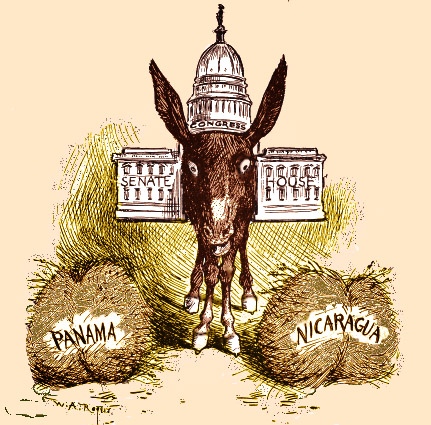
Buridan’s Ass is a famous thought experiment which features a perfectly rational ass rationally stuck between two equally attractive alternatives.

Tragically equidistant between hay and water, the ass lies down to quietly die – as it would be irrational to pursue either over the other.

At work I’m more Speedy Gonzales than Buriden’s Ass at times. And at my worst Wile E. Coyote – hatching complex schemes for simple problems.

I’m often at my best when I slow down a bit. As I wrote today:

20120613-201721.jpgBetter sometimes to lie down between, than run needlessly and heedlessly between both seeking a carrot.

Perhaps I should treat myself to the odd sit down.