Forgiving 

I’ve just finished Desmond and Mpho Tutu’s ‘The Book of Forgiving’, picked up (as all the best things are) at the local library. 

It’s a simple and powerful read, which is studded with some terrible stories of personal loss, sickening violence and genocide; and the remarkable power of forgiveness in the face of them.

The basic argument is forgiveness doesn’t excuse responsibility – it explicitly acknowledges and names it. Only once the ‘story’ is properly told, and the ‘hurt’ is ‘named’, is there the possibility to forgive. 

And doing so is the way to be freed from being a victim – including forgiving yourself if you were ever a perpetrator.

There is a straightforward path to forgiveness which helps people exit the alternative – a never-ending cycle of harm and revenge.

I saw this diagram the night before interviewing someone on a difficult HR standoff. It certainly helped me to listen for longer: to let the person ‘tell their story’ and ‘name their hurt’, which seemed to move things forward.

The final two steps – ‘granting forgiveness’ and ‘renewing or releasing the relationship’ are about seeing  ‘perpetrators’ as human beings – recognising none of us was born evil and we all have within us the capacity to do terrible things.

Easier said than done; but nobody said it was easy – and it’s the only path to forgiveness.

The ‘hurts’ Tutu has seen in South Africa and Rwanda – so many violent murders – seem too huge to ever forgive. But the Truth and Reconciliation commissions he oversaw all basically followed this fourfold path: tell the story, name the hurt, grant forgiveness and renew or release the relationship.

As both he and the Dalai Lama have said: forgiveness is both a source and a sign of true personal strength, 

Think small


I’ve signed up to a terrific blog from a chap called Eric Barker from UCLA. Loads of great resources, links to thought-provoking books and simple ‘to do’ lists to do more.

This week’s top tip is how to create a habit: 

Think small. Real small. No, even smaller. From Stick with It:

“Focusing on small steps allows people to achieve their goals faster than if they focused on dreams. Focusing on small steps also keeps people happier and more motivated to keep trying because they get rewarded more frequently.”

Simple – I couldn’t agree more. 

This is one of the top lessons from Martin Seligman [as here]. Break stuff up into smaller chunks and you get more stuff done; and feel good about getting more stuff done. Simple. 

Thinking small wins big. Here’s to more from Eric Barker.

Heartfelt


As a person (traditionally) of the head, I generally take the arrow of causation to be ‘the head drives the heart’…

Of course that’s not always the case. When the heart skips a beat or starts misbehaving; that certainly gets the head thinking.

But a book I’ve been reading advocates what many world religions say: rather than just a rather ugly fleshy pump, the heart is a rich source of information on what’s going on inside.

The thesis is, if you’re carrying some problem you’ve not ‘processed’, when your mind wanders anywhere close to it, you can feel it a sort of ‘blockage’ in the heart. Experimenting with this for three or four weeks – for me at least – there’s absolutely something in it.

The physiology and location of the actual electrical impulses is a matter for the neurologists and cardiologists; but if I concentrate on where I ‘feel’ angst, I do indeed feel it in the heart. 

And what an acute detection mechanism it is – when you properly tune in to it… If I think of something or someone and feel a slight (or indeed major) tension in the chest; then sure enough it turns out there’s some form of messed up feeling hiding in there.

A combination of taking a breath and exploring round the ‘blockage’, and lo and behold there’s invariably some unfinished emotional business to have a look at…

A few weeks in, and I’ve ironed out and processed a good few anxieties I didn’t know I had, rattling about my chest cavity. I find I’m pausing and reflecting; but also acting and reacting more contentedly, easily, helpfully and kindly. 

Instead of chucking the brain at problems, I’m tuning into and listening to the acutely sensitive and (thankfully) steady thump of the heart. It’s a very fine guide.


Bees 

In a meeting this week I asked how people felt about ‘whacking the beehive again’. 


We are trying a new ‘change management’ approach (as opposed the University standard of ‘resistance management’) on a major move; part of which involves regularly asking people how they feel about what we’re doing to them and all the things we’re changing. 


It’s finely poised. As I pointed out, asking people to put on the beekeepers outfit again – as we bring out all the angry bees – feels like a big ask on the hottest June in record at the end of a long academic year…


Still the point of change management is to keep asking, keep answering and keep moving forwards; so we agreed to give the beehive one last whack before summer and ask people if they felt ‘adequately informed’, ‘knew what they needed to do’ and were ‘broadly positive or broadly negative’.

Afterwards, I sent two of my fellow beekeepers this [only slightly doctored] quote from Marie Curie; which serendipitously had landed in my inbox that morning: 

Nothing in life [including bees] is to be feared, it is only to be understood. Now is the time to understand more, so that we may fear less. 

Marie Curie (1867 – 1934)  

But later in the day we did have a laugh, agreeing that we might need to pump a bit of smoke in the hive afterwards, to calm it all down again. 


Still as I emailed them later: 

“A former colleague of mine who keeps bees claims that you have to keep your hive in a reasonable state of agitation otherwise half of them clear off and make a new one!”

And now we can practise the art with the real thing… on the vary same day, we discovered a bee panel has just been installed on one of our busy London campuses…

I’ll be making a bee line!
 

Cetaceans

Famously clever like us, Cetaceans are the smart cookies of the ocean – and they’ve been in my thoughts at work this week. The question being which one to be…

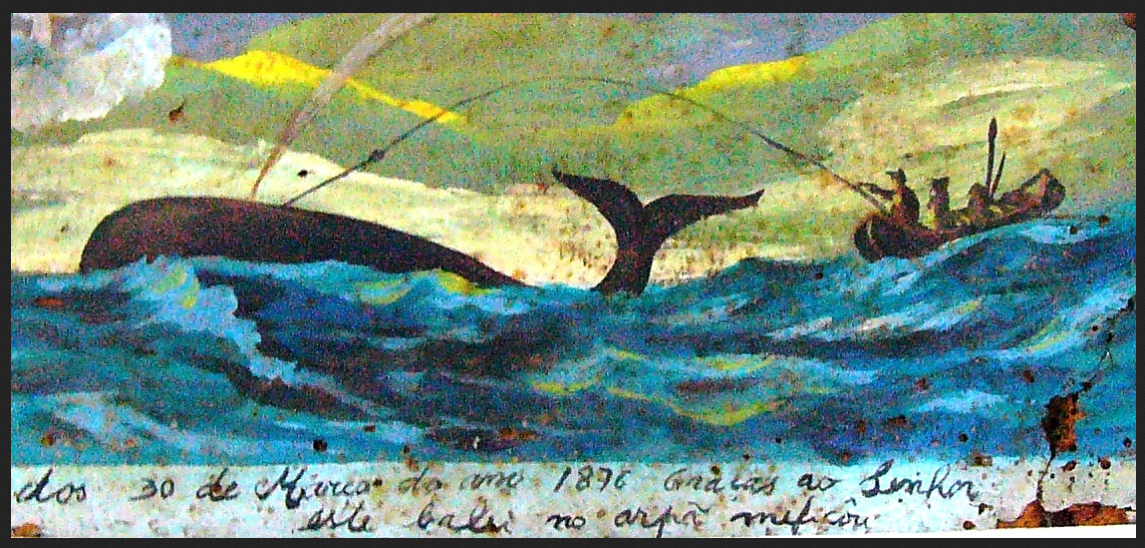
The Sperm Whale?

Wikipedia tells us the Sperm whale “has the largest brain of any animal on Earth, more than five times heavier than a human’s.” Sadly however: “the spermaceti oil from which the whale derives its name was a prime target of the whaling industry, and was dominant for use in oil lamps, lubricants, and candles.” Ouch – so much for my strategy of staying below the waterline.


The Dolphin? 

Fast, flashy, polygamous and a glossy surface performer Wikipedia cautions re the dolphin thus: “Dolphins engage in acts of aggression towards each other. The older a male dolphin is, the more likely his body is to be covered with bite scars. Male dolphins engage in acts of aggression apparently for the same reasons as humans: disputes between companions and competition for females. Acts of aggression can become so intense that targeted dolphins sometimes go into exile after losing a fight. Sounds like a young man’s cetacean to me – as I said in my performance appraisal this week: “I’m knocking on 50; I’m getting too old for some of this stuff!”


The Orca?

This is the chap: “a toothed whale with a diverse diet, there is no animal that preys on them. Killer whales are a cosmopolitan species; their sophisticated hunting techniques and vocal behaviours, which are often specific to a particular group and passed across generations, have been described as manifestations of animal culture. Killer whales are highly social; some populations are composed of family groups (pods) which are the most stable of any animal species.”  


As the pack ice breaks up, and lots of things start moving around; the Orca’s my pick of the cetaceans!