Climate Change

20141115-142034.jpg

As I said to several people, this week, at work: nine tenths of navigating organisational life (it seems to me) is about discerning the difference between weather and climate.

On any given day they look the same. But when it’s been raining on your parade for months, it may be time to accept that the climate has turned for the worse. Still, there’s never any shortage of aggro in any workplace, so just as important is to spot the coming of better days.

My mother-in-law favours the nautical saying: if you can see a patch of blue as big as a ‘fisherman’s trousers’, even in a gunmetal sky, then the weather is set to turn. And despite some very heavy and sustained rain this week – I have spied the proverbial fisherman’s trousers.

I fancy the worst is over, and the climate is about to change. A few more heavy showers, and some wintry months remain. But, a quiet smile, a more cheerful élan and a spring in the step are called for – even if Spring itself is some months off. I forecast good days ahead.


Closed for Lunch

IMG_3105.JPG

Coming back from a family trip
to France last weekend – with the beginnings of a Michelin tyre round my waist – I decided something must be done.

For some time the missus has been advocating the 5:2 diet. Eat normally for five days and eat nothing at all for two. I didn’t fancy it at all. Not least since I go all wobbly on my bike home from work, if I’ve not got enough sugar in my system.

Enter of all things the Qur’an. I’d decided to take a break from wading through the King James Bible (Jees it goes on) to try another holy book, to see what all the fuss is about.

And the answer to my expanding waistline came in the first sura – Ramadan. Albeit I’m not sure about no liquids (watch those kidneys), if billions of people going back over 1,500 years have managed a whole months of eating nothing all day, surely I can.

And so I can – it’s pretty easy really. A bowl of porridge to start the day and then leave food on the shelf until evening comes. Not every day of course. It’s nice to meet and spend time with people of quality over a spot of lunch. But bang in one workday and a bit of weekend discipline and hey presto.

Plus the great thing about doing it during the day, is no-one really notices. So it doesn’t become a big drama. I cooked a Sunday roast and all the trimmings last Sunday – salivating gently – and then at 6pm it was time for us all to eat. Mmmmm, it tasted all the better for a little restraint.

The spare tyre is deflating steadily. And food is something, I really fancy after a day of waiting; instead of feeling obliged to mow through, just because it’s feeding time at the zoo.

All of a sudden, Christmas feels less of a looming food mountain. At least I’ll be able to quietly shelter in the lee of all those unnecessary calories during the day.

Fasting – sounds old fashioned, but has lot to commend it in the modern world. It’s good to hear your tummy rumble once in a while.

Lights, Camera, Action

IMG_3081.JPG

Could it be I’ve crested the hill on Art history? Having scaled the giddy heights of architecture with Gaudí, faced with a shelf of books on Dali, Paul Klee, Gustav Klimt and ‘modernism’, I felt a bit flat at the library today.

IMG_3087.JPG

A detailed exploration of Hieronymus Bosch’s variety of earthly delights and hellish torments didn’t light my fire either.

Wandering unrequited from the Art section, in slight desperation, I picked ‘A Brief History of Tea’ (can you have too much tea?). But then I alighted upon ‘Cinema, the Whole Story‘ – hundreds of films, thematically and chronologically ordered, with their plot, best bits and critical reception all summarised.

Hooray! it’s exactly where I started with Art history. Cinematic discovery, development of a dash of discernment and future delights here we come. Lights, camera. action!

IMG_3082-0.JPG

The Farm

IMG_3003.PNG

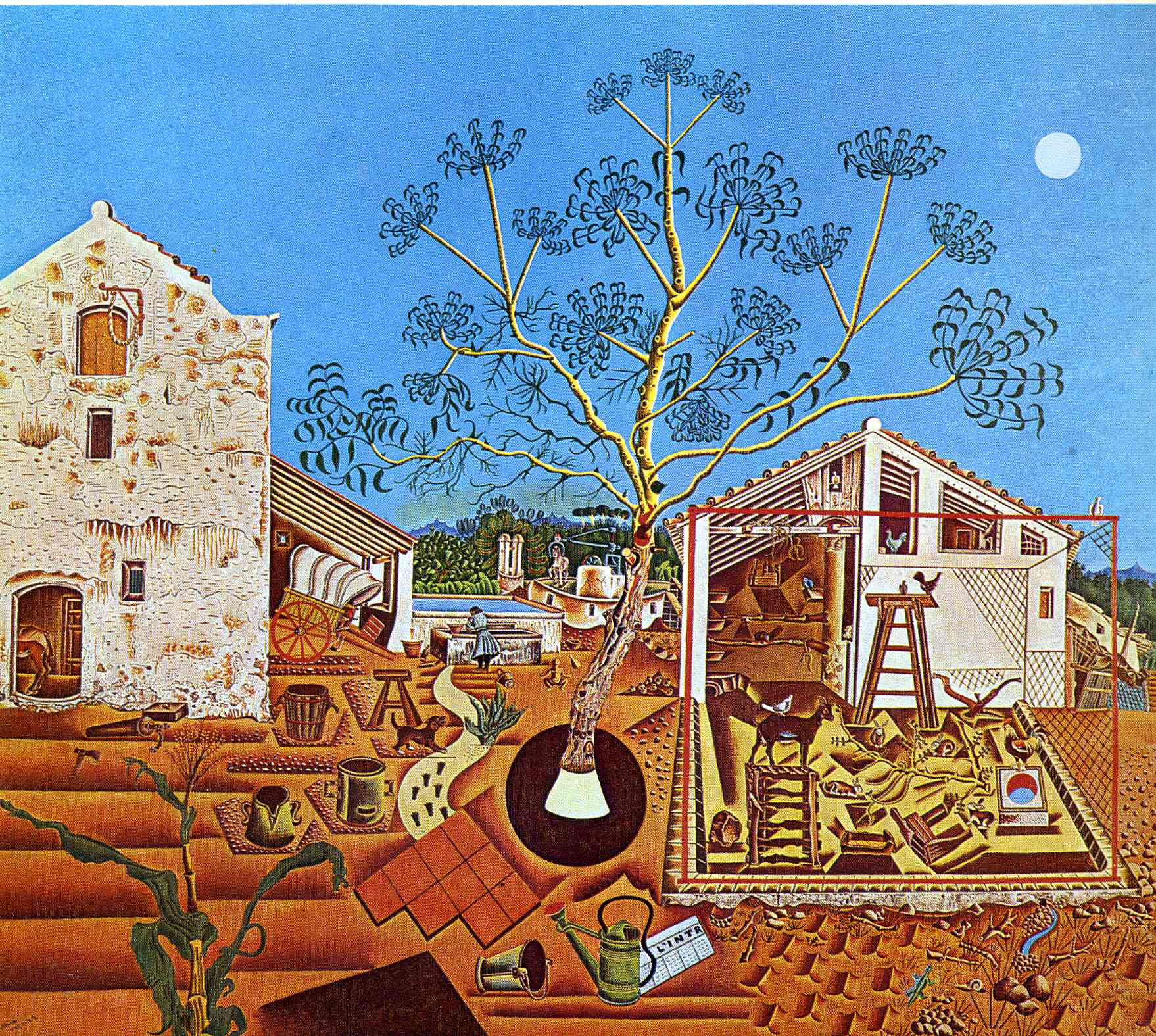
Funny how life throws things together… I got a book from the library on Joan Miró, finally got round to reading it; then he appeared in my DailyArt App – and thus ‘The Farm’ (above) came to symbolise my week.

According to DailyArt:

Miró wrote “The Farm was a résumé of my entire life in the country. I wanted to put everything I loved about the country into that canvas-from a huge tree to a tiny snail.”

Miró spent as many as eight hours a day for nine months working on this painting, for which he then struggled to find a buyer in a Parisian modern art market crazy for Cubism.

Much like Miró, I sometimes think of my working life as being like working a farm. It has its annual rituals, seasons and festivals – planning, budgets, conferences etc.

It also has its fair share of the features of Miró’s farm: cockerels crowing, structures we all talk about but haven’t actually built yet (like the red frame of the non-existent barn) and hard working folk like the washerwoman in the background – who are easily missed, but quietly getting things done.

Miró’s farm, like mine, has lots going on. But the most important thing, is to recognise the blue sky and solid structure to the left. It’s easy to forget; the fundamentals of the farm aren’t bad, especially when you look at the big picture.

IMG_3004.JPG

Broken Wings

IMG_2996.JPG

A great many birds with broken wings or ruffled plumage, have come to perch in my tree in recent weeks. Human beings are fragile and so easily damaged – usually by each other.

We all like to believe life is fair. So, in the end, very few people are able to cope well with anxiety or things going badly for them.

We were taking about this at home the other day, asking the question:

“Is it possible to communicate to other people you are stretched, stressed or tired yourself, without being pissy, shirty or sad with them?”

Probably not. Because ‘pissy’, ‘shirty’ and ‘sad’ are exactly the ways we communicate stress. To do it any other way just confuses people – or they simply don’t hear.

So for the various birds; small and large, young and old; who have come to unburden themselves on me, there are only really two ways to be:

1) ‘pissy’, ‘shirty’ or ‘sad’; and quickly break both their wings so they never come back to my tree again.

2) reach for patience, tolerance and kindness; give away some all-too-precious time, and hopefully help them a little, to fly onwards.

I’ve mostly managed the latter. Some are still chirruping in my branches. Some are permanently nested there; so they are to be lived with.

But at least a few have gently flapped away with splinted wings or smoothed feathers. And that’s a success of sorts. Kindness is always the best answer.