A lovely simple happy day. Two parks, several swings, much scooting, pasta, a jigsaw, books, hot dogs, and happy tired faces at bedtime. The whole spent almost entirely with my two lovely kiddies, who played and chased and laughed and sometimes bickered, but were largely very wonderful company. Happy days.
I found myself facing old demons this week – in a Ministers office with less than an hour’s notice and plenty at stake. But nearly everything gets easier with experience.
Nearly a decade on from this being my day job, I wasn’t rattled at all. When my time came to speak I was oddly calm, pretty fluent, affably persuasive and perfectly good-humoured.
Later as things were getting choppy, I instinctively waded in with a tide-turning point: ‘today’s good intentions risk tomorrow’s unintended consequences’; which helped keep some important foundations from being inundated. Then smiles, handshakes and off. Job done.
A quick summary letter, to nail the key points for posterity, and home for family and food.
So what made the difference? Experience; yes. Having the right arguments in my head; yes. But most of all keeping fear at bay: fear of ridicule, fear of being bullied, fear of failing, fear of humiliation and fear of consequences.
Just writing those fears makes my breathing shorten. But these days fears don’t prey on me half as much as they once did. Perhaps the greatest dividend from philosophy is a calmer and more ordered mind. It helps put many demons to rest.
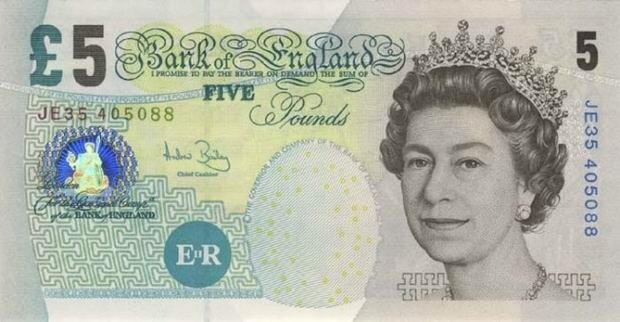
I’ve just splashed out a fiver on a hardcore philosophy book ‘The Reasonableness of Reason’. Second hand mind you, austerity reigns. But absolute austerity is probably slightly unreasonable.
It is, by all accounts, an exhaustive investigation of whether following reason is better than scepticism or belief. My current bedtime read Philosophy Now carries an admirable review by Professor Raymond S. Pfeiffer of what I’ve bought, which I précis here:
Naturalists argue that there are some general goals that almost all humans in all societies have in common, such as obtaining safety, food, love, meaning, and an understanding of the world. In fact, no one has suggested possible alternatives.
Naturalists further argue that human goals are best achieved by a group of standards, rules and methods referred to as ‘the theory of middle-sized physical objects’. This theory is the idea that there is a world inhabited by everyday objects that behave in the kind of way they seem to behave in our experience of them.
The naturalistic claim is simply that a preponderance of evidence reveals that using the claims, methods, standards and rules of the theory of middle-sized physical objects (a.k.a. using reason) is the best way to fulfil human goals.
This process – which is the use of reason and the scientific method – has produced the best confirmed and most useful thinking about reality, and continues to do so.
Others may choose a different process to understand the world, such as basing some of their beliefs on faith. But history has shown that such an approach often goes wrong in some way, and that, when corrected, it is usually corrected by the use of reason and the scientific method.
Furthermore, sceptics, who suspend belief in reason and seek to follow the customs of the culture in which they live, use the very same theses, methods and rules of thought as the theory of middle-sized physical objects, and so use the tools of reason anyway.
Hauptli (the Author) concludes that “If we seek optimum goal-fulfillment, the use of reason will promote this best in the long run.” So although there is no certain proof of the advantage of using reason, it provides a better option than any known alternative.
How very reasonable. I have a feeling I could have saved myself that fiver.
Having fought and won all winter long – through tempest and storm, deluge and downpour – I have finally been brought low. Not work, not home, not finances, not fatigue, but good old germs.
I have copped the family cold and feel rubbish. All life contains some suffering as the Dalai Lama points out, but is there a more pointless way to be laid low than with a cold?
We have astronauts and cosmonauts in orbit and super-chilled particles smashing together at the speed of light. Yet when it comes to medicine, short of chopping it off of blasting it with some chemical or other, we are clueless.
All it takes is a couple of hours standing around on a chilly afternoon, some arduous fetching and carrying on the back of a few late nights and an immune system off its game and bingo – germs win; I lose. Harrumph.
Of course we’ll never beat the common cold, just like we’ll never beat the onward march of the years, or the bad in human nature, or the all the wrong in the world.
But still, surely someone could have a better try? Never mind a mission to Mars how about some advance on Lemsip?
But the one good thing about being laid low – especially on the silent, seeping, sapping way a cold spreads through you – is the reminder just how fighting fit I feel most days. Mustn’t grumble. Now back to grumbling…
Freedom
Strides
Sky
Buds
Architecture
Birds
Small sounds
Joggers
No dog
Park
Get a dog
Steps
Slowing
Then
Home
For the first time in about a decade I found myself at a relative loose end – at home with the missus and kids having no immediate need of me. Bizarre.
So I went for a walk. Spring sunshine, birds chirruping and the luxury of solitude. Wonderful to have the time to notice blossom, roof lines, trees and flowers.
I walked up roads and cut-throughs I’ve never trodden before. And then it started to feel a bit weird, all on my own. And I yearned for our big old bristly stripy greyhound, who is no more.
Absent children, a man surely needs a dog on his walks. One day…