Relevant Complexity 1) The Spice of Life

20120108-152605.jpgMy new theory of everything: all purpose and enjoyment in life is found in ‘relevant complexity’.

I came to the idea via the Hungarian American psychologist Mihili Csikszentmihalyi’s theory of ‘flow’: that we achieve optimum experience when we meet considerable challenge with considerable skill. Or put another way – when we master complexity.

I propose, that, the value of doing something and the intrinsic enjoyment in doing it, lies in it having and creating further ‘relevant complexity’. Let’s prove the pudding with food.

Does relevant complexity describe our relationship with food? Yes, I think it does. I’ve started doing lots of cooking lately – not least Indian. I seem to really enjoy it. Why? It needs doing. I get a break from the kids. When I get it right I get positive feedback from the missus. And, I mostly quite enjoy eating what I cook.

Notwithstanding there are some great dishes which are very simple, most of what’s considered ‘tasty’ in the world’s cuisines involves blending different ingredients, tastes and textures in relevant complexity.

To many, too much of one, one that’s out of place or the wrong blend of ingredients creates irrelevant complexity – often simply nasty. In fact I’d argue that even the simplest ‘great’ foods rely on great ingredients – which are often very complicated to grow, make or rear, requiring optimum care and conditions.

As the scientific chef Heston Blumenthal points out, cooking is applied chemistry. The complexity comes in applying it to that most unpredictable of non-linear systems – human taste.

And tastes develop and mature with experience. Taste doesn’t stand still, it is cultivated and grows. Blame ‘flow’, if the challenge doesn’t move on we become bored.

So, I conclude the joy in making and eating food lies in creating, enjoying and cultivating a taste for ‘relevant complexity’. It’s the spice of food life. Mmmm.
Autumn Sunrise

20111116-191114.jpg

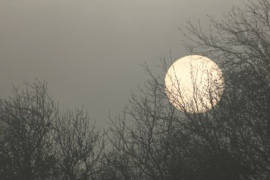
On a misty morning
With the kids in the car
Turning left
The surprise of a huge sun
Low in the sky
A silver gold blob
Just too bright to stare at
Not too bright to blind
Heralds
An emergent phenomenon
Not easily had
Coming into being
In my busy head
Happiness
More than a brain state
A life lived instead
Myriad things
In work at home at play
To bring together
Before it is found
Easily lost
A single moment can confound
But in simple pleasures
Doing the right things
Caring for people
About things
And oneself
Happiness shines
At times
Just too bright to stare at
Not too bright to blind.

I talked to a taxi driver today – an old man and a nice one. He revealed he studied art a good many years ago. Very much against the odds on a scholarship, he went to the art school at the bottom of our road – near where he was taking me.

He said other cabbies sometimes mock when he says he paints, but it brings him great peace and satisfaction. I owned up that I’ve started writing poetry too. We found ourselves kindred spirits. It’s not always the winning, it’s often the taking part with art. This poem refers to yesterday, but some of the warm glow spilled into today’s conversation.

Five Minutes

What is time? Judging by my day today, five minutes is the difference between happy and sad, frustration, tears, pressure in the chest cavity and making it just in time – or just too late.

As Kierkegaard said, the demands of the ‘ethical phase’ of life are unlimited. And they lead ultimately to failure and despair. 

But perhaps not. Five minutes is also long enough to clear your thoughts, take a breath and change the internal weather. A smile, a shrug, a stoical thought and a moment’s reflection before marching on. 

It all gets done, and if the demands are unlimited, the rewards are too – a big hug from a small child, a smile of thanks from a good person you’ve helped and the sense of being appreciated, needed and loved.

As the philosopher king and Roman Emperor Marcus Aurelius wrote in his Meditations:

The only rewards of our existence here are an unstained character and unselfish acts.

It’s not all bad meeting the insatiable needs of others, so long as you save the odd five minutes for yourself.

Sacre Bleu

A splendid weekend en famille à Paris was marred only by two extraordinarily slooowly served meals. I’d write Zzzzz. But with four children, from 4 to 8 years old, over an hour of waiting – each time – for any food was more @!&£.

I was less bothered than the people I was with. Perhaps because having lived in Paris, I find surly service strangely reassuring. As a Parisien taxi driver told me on my last visit:

God, he is deciding to make a very beautiful country. He is making it very big and putting beautiful countryside and animals in it. He is giving it very good food and very good drink. But then he is realising every-body will want to live here. Merde. So he has an ideé! He puts French people there, so nobody else will want to stay!

In fact once you get the hang of French ‘pipple’ they are quite straightforward. First contact is often brusque – borderline rude – to a British taste (or Australian since we were with Aussies). But give as good as you get and add a bit of humour and you’re ‘best mates’ in no time. It’s as if there’s a threshold of rudeness, which you have to meet, to join ‘Le club français’. Too polite and you’re not worth the bother.

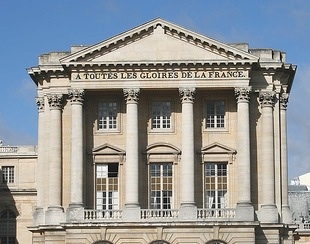
An inscription on the pillared back of Versailles shouts out in capital letters ‘To all the glories of France’. You can’t beat Paris: the Tour Eiffel, the Champs Élysées, crazy driving, le hot dog, le steak frites et le petit café to finish.

Add to that the people. Splendidly rude. But often warm, once the ‘first joust’ is done. It wouldn’t be la belle France without them.

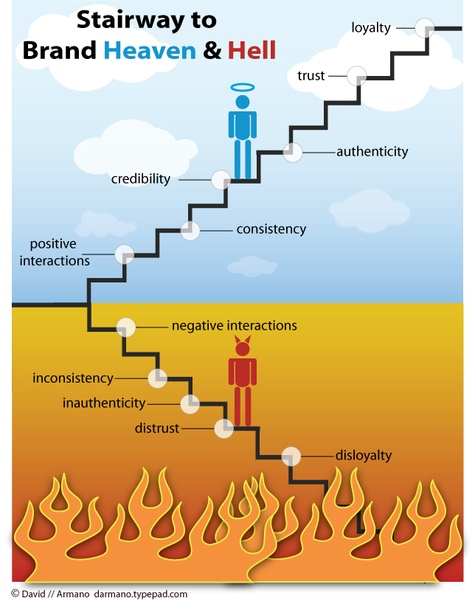
Heaven and Hell

I read in the New Scientist a while back that people who’ve suffered near death experiences commonly have a sense of drifting out of their bodies, floating above themselves and being drawn towards brightness above them.

Sounds heavenly. But according to the scientists there may be a simpler neurological explanation – the action of oxygen depletion on the brain.

My theory of Hell draws on Montaigne’s description of his near death experience falling off and being crushed by his horse. His delirium made time stand still, pain an irrelevance and his life pass before him scrambled in time and place by hallucination.

A troubled conscience taken into that context must be a special kind of torment. And stripped of all sense of time, it meets many of the classic criteria of Hell.

I watched the film ‘Source Code’ at the weekend. The hero is a massively injured soldier kept alive, artificially, so his brain can be deployed in a virtual timeshift to stop a ‘dirty bomb’. He saves the day. And his brain comes to a stop at a perfect moment – kissing the virtual ‘girl next door’ having saved millions of lives. Heaven.

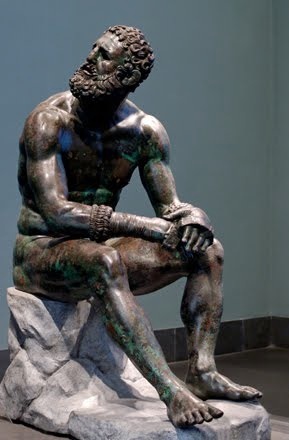
We could all check out any minute. In olden times often with no warning in a brutal instant. Spartans sought glorious death on the battlefield – not much time to contemplate your sins in that kind of death. But there were plenty of other ways to go.

Montaigne, like the ancient philosophers he drew on, writes a lot about death. He points out:

We call that only a natural death; as if it were contrary to nature to see a man break his neck with a fall, be drowned in shipwreck, be snatched away with a pleurisy or the plague, and as if our ordinary condition did not expose us to these inconveniences… To die of old age is a death rare, extraordinary, and singular, and, therefore, so much less natural than the others; ’tis the last and extremest sort of dying: and the more remote, the less to be hoped for.

These days many of us will go slower and with plenty of time for delirium – troubled or ecstatic. Even in an accident there’s a fighting chance of oxygen, crash teams and intubation keeping you going long enough for a few timeless hallucinations. All the more reason to live well, without regret or a troubled conscience.

As Montaigne observes:

As an ill conscience fills us with fear, so a good one gives us greater confidence and assurance; and I can truly say that I have gone through several hazards with a more steady pace in consideration of the secret knowledge I had of my own will and the innocence of my intentions.

And quoting Ovid:

“As a man’s conscience is, so within hope or fear prevails.”

A clean conscience is a good principle for life. And, although I’m in no hurry to test it, I suspect also for death. If you buy my theory, bad deeds and a bad conscience could last an eternity in our final moments. Good ones potentially shimmer with ethereal light. Whatever you think comes next, a happy ending is another reason to invest in a good life in the here and now.