Irrelevant Complexity 1) – Odd Jobs

20130427-144320.jpg

‘Relevant complexity’ is my theory of everything: satisfaction and joy arise from the pursuit of complex, worthwhile and comparatively challenging pursuits.

Art history, particle physics, the raising of children, the preparation and enjoyment of good food etc etc – all relevantly complex.

You need to learn, improve, occasionally triumph – and sometimes feel you actually know almost nothing – to achieve the satisfaction of mastering relevant complexity with a good degree of skill.

Then there are hobbies. Same effect Csikszentmihalyi’s ‘flow’ – as one become adept or expert but some risks: becoming a bore or solitary obsessive. I have achieved ‘flow’ by hoovering well, even cleaning a fridge. But these are not monuments to my life’s work or relevantly complex pursuits I’d want defining who I am.

What’s in? An eclectic and erratic list: cooking, relevant; gardening, chore. Writing, relevant; drawing embarrassment. Cleaning the fish tank, chore (and only tolerable if I’m left to do it properly) odd jobs, drilling and hanging things source of great irritation and angst. Why?

Because it’s hard to get odd jobs right. Our walls are rubbish, you only ever do a thing once – so you make maximum mistakes, never get the chance to practice what you’ve learned. And the smallest thing can take disproportionate time for a disappointing effect; which then stares down at you in reproach for years. Aaargh. Irrelevant complexity.

My latest botched odd job stares down at me here:

Curtain derailed
DIY failed
Drooping drapes
In awkward shapes
Lots of screws
And hacksaw blades
Variety of fixings
Wobbling and fiddling
Scarcely blocking the sky
Humble pie.

But every cloud has a silver lining. After three separate wasted days on and off up ladders, with hacksaws, at the DIY shop, I definitively gave up in a huff on our lounge curtains.

Then a miracle intervened. My beloved took to the ladders, took up the drill and made it all hang together. Perhaps she found it satisfying enough that she might become Oddjob now… Fingers crossed.

Writing

20130127-130029.jpg

Is there a better thing than writing? While I’m not with the 20th century British philosophers who said language is all there is, I am with Aquinas. He’d say that, along with body and soul, language is a defining part of the human experience.

20th century norms made writing a minority sport – one for the professional. The rise of social media in the 21st century means we can all have a go.

I find if I don’t get the chance to write something, the day feels unfulfilled. And if (rarely) I’ve a moment with nothing I have to do, writing – or reading someone else’s writing – is the first thing I want to do.

For twenty years – from university to my 42nd year – I didn’t write anything for my own pleasure at all. Thank goodness for the invention of iPhone as my carry along notebook. I couldn’t be happier than when tapping out a bit of text with my right thumb.

Lights Down

20121103-110620.jpg

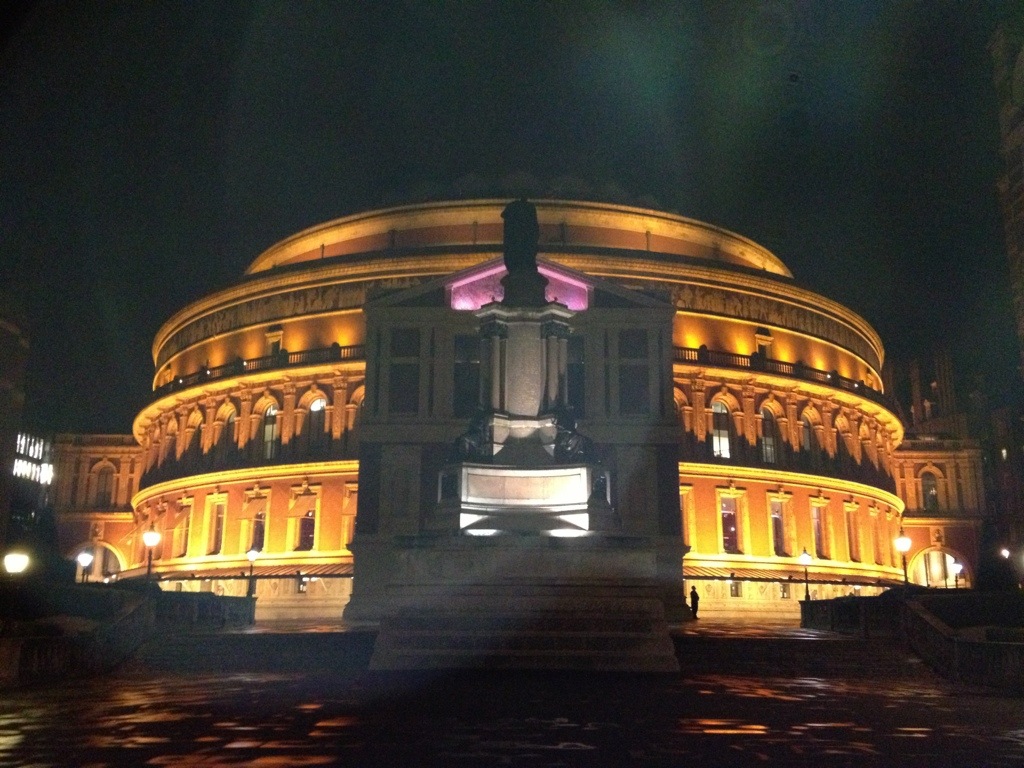
Months back – having discovered ‘relevant complexity’ in Saint Saëns Organ Symphony no 3 – I booked two tickets for the Royal Albert Hall.

After a long old week, neither me or the missus fancied it much. I tried to offload the tickets to my folks – nothing doing. So I asked my daughter if she wanted to go? ‘Why yes’ she said brightly.

Pace 6pm. And smartly dressed, armed with a bag of sweets, we set off. After a nice vanilla ice, we took our seats and had a good look at the splendid scene. Huge dome, red plush, gold fittings – and the enormous great organ which massively towers at one end of the Royal Albert Hall.

We reckoned that organ was about the size of our house; the illuminated organ ‘loft’ about the size of her bedroom. But a good deal tidier I pointed out to her; and a good job too or the organist would never find his music. She was not amused.

Then lights down, orchestra in, conductor up and away we went. Berlioz to get the players warmed up, then onto Saint Saëns. But my little one was nodding. A pale face, tired eyes, fiddling with her little shoulder purse – she was knackered.

A whisper: ‘How long to the organ?’ 12 minutes I said. A minute later ‘how long to the organ Dad?’ Five minutes I lied. Five minutes later: ‘how long to the organ?’ Two minutes I gestured silently.

And her eyes gently closed and she was asleep. Moments later BAHHHM! And the roof of the Albert Hall nearly blew off. Her eyes snapped open. ‘That’s the organ’ I said.

She stared wide eyed. And then the lead in her eyelids weighed them down again. And silently she slept through one of the loudest crescendos – on one of the largest organs in the world. Just a twitch of her brow at the final booming finale which made your tripes vibrate.

Proud of her. She did great. A memorable night out and a good chuckle. We were both shattered. But sometimes you have to dig deep to get the best from life. A night out with my big brave girl was a performance I’ll remember forever.

Relevant Complexity 6) Superhumans

ImageThe most moving thing I’ve seen in a long time is the Channel 4 ‘superhumans’ clip to preview the London 2012 Paralympics. Just watch it.

The music, the muscles, the missing limbs and pieces of bodies, the bomb, the womb, the car smash, the slap of the basket long shot. It’s stunning.

But the bit that chokes me up, is the lad in GB shirt number 5101 in the middle. He looks at you like he’s maybe not sure if you’re going to laugh at him, but the almost imperceptible smile suggests he’s starting to believe that after this Paralympics you never will again.

I’m proud of Channel 4 and the UK for taking the ‘dis’ out of disability. There are millions of people round the world who – like those in the video – have to be ‘superhuman’ in their daily lives. All with different stories and obstacles they overcome and some they can’t.

What a way to remind us there’s amazing relevant complexity in people – which we often demean as disability – that too often we, society, employers, even governments choose to look away from and ignore – instead of recognising it as superhuman.

Relevant Complexity 5) Age

20120707-124703.jpg

Talking to someone at work, she said she’d been surprised that a very experienced chap in his late 50s had come on a training course.

We concluded that age shouldn’t matter in deciding who gets training. I know plenty of pig-headed twenty and thirtysomethings who’d have got less and will give less as a result of that training course – it’s openness to new ideas that matters.

It dawned on me that nearly all the people I most enjoy conversation and contemplation with, are at least ten years older than me. And many much older. When it comes to thinking about things, you can’t beat the right sort of older person.

Contemporary society glorifies youth. But younger people haven’t always got much to say. Of course there’s freshness and simplicity but relevant complexity in people takes time to grow.

Openness, curiosity and the experience of age are key attributes of the Aristotelian ‘friend in contemplation’. Aquinas’s ‘prudentia’ – practical wisdom – is not innate, it is learned. Wisdom takes time. Forget youth, when comes to interesting people – the oldies are the goodies.