Change the Record

At lunch with a good friend today, we got talking about people and politics. We both admitted to getting cross, as we get older, at having to spend time with people whose views never change and who keep chewing the same cud. We concluded that people – even friends – who repetitively complain about things, moan about politics and never do anything about anything, are to be frequented with caution.

Later, I found myself writing a speech about society and citizenship for work. Where else to turn than Aristotle and Aquinas. Looking for inspiration, I stumbled across the reason my friend and I had been so grumpy about the monotonous tunes of stuck records. They are missing the point. Here (shortened) is what the Internet Encyclopaedia of Philosophy has to say on politics and society:

Following Aristotle, Aquinas believes that political society (civitas) emerges from the needs and aspirations of human nature itself. Thus understood, it is not an invention of human ingenuity nor an artificial construction designed to make up for human nature’s shortcomings. It is, rather, a prompting of nature itself that sets humans apart from all other natural creatures.

To be sure, political society is not simply given by nature. It is rather something to which human beings naturally aspire and which is necessary for the full perfection of their existence. The capacity for political society is not natural to man, therefore, in the same way as the five senses are natural.

The naturalness of politics is more appropriately compared to the naturalness of moral virtue. Even though human beings are inclined to moral virtue, acquiring the virtues nonetheless requires both education and habituation. In the same way, even though human beings are inclined to live in political societies, such societies must still be established, built, and maintained by human industry.

Both Aquinas and Aristotle write about how, and why, families, the household, villages and clusters of villages come together – basic biological needs and division of labour. But ‘society’ only emerges beyond a certain threshold. And why? Because:

In addition to yielding greater protection and economic benefits, it also enhances the moral and intellectual lives of human beings. By identifying with a political community, human beings begin to see the world in broader terms than the mere satisfaction of their bodily desires and physical needs. Whereas the residents of the village better serve their individual interests, the goal of the political community becomes the good of the whole, or the common good

The political community is thus understood as the first community (larger than the family) for which the individual makes great sacrifices, since it is not merely a larger cooperative venture for mutual economic benefit. It is, rather, the social setting in which man truly finds his highest natural fulfillment. It is in this context that Aquinas argues (again following Aristotle) that although political society originally comes into being for the sake of living, it exists for the sake of “living well.”

And this is what we were scratching at today. Friendship, communities, politics and society all require some form of constructive engagement, contribution and participation to reap the rewards of an ‘enhanced moral and intellectual life’ and “living well”. So we voted with Franklin D. Roosevelt, don’t waste time our time blaming the system, other people or society. As Roosevelt famously said ‘Do what you can, with what you have, where you are.’ Or change the record.
Heaven and Hell

I read in the New Scientist a while back that people who’ve suffered near death experiences commonly have a sense of drifting out of their bodies, floating above themselves and being drawn towards brightness above them.

Sounds heavenly. But according to the scientists there may be a simpler neurological explanation – the action of oxygen depletion on the brain.

My theory of Hell draws on Montaigne’s description of his near death experience falling off and being crushed by his horse. His delirium made time stand still, pain an irrelevance and his life pass before him scrambled in time and place by hallucination.

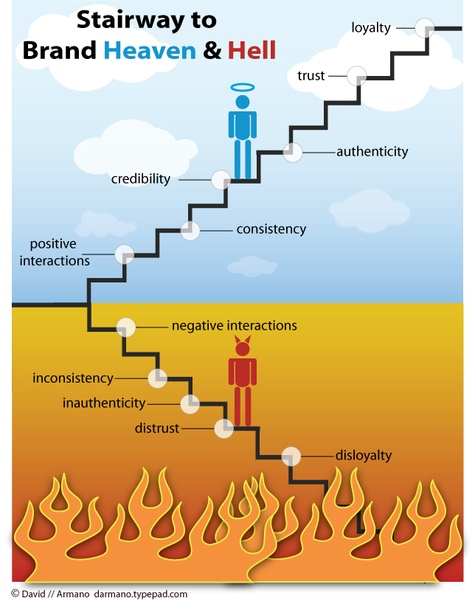
A troubled conscience taken into that context must be a special kind of torment. And stripped of all sense of time, it meets many of the classic criteria of Hell.

I watched the film ‘Source Code’ at the weekend. The hero is a massively injured soldier kept alive, artificially, so his brain can be deployed in a virtual timeshift to stop a ‘dirty bomb’. He saves the day. And his brain comes to a stop at a perfect moment – kissing the virtual ‘girl next door’ having saved millions of lives. Heaven.

We could all check out any minute. In olden times often with no warning in a brutal instant. Spartans sought glorious death on the battlefield – not much time to contemplate your sins in that kind of death. But there were plenty of other ways to go.

Montaigne, like the ancient philosophers he drew on, writes a lot about death. He points out:

We call that only a natural death; as if it were contrary to nature to see a man break his neck with a fall, be drowned in shipwreck, be snatched away with a pleurisy or the plague, and as if our ordinary condition did not expose us to these inconveniences… To die of old age is a death rare, extraordinary, and singular, and, therefore, so much less natural than the others; ’tis the last and extremest sort of dying: and the more remote, the less to be hoped for.

These days many of us will go slower and with plenty of time for delirium – troubled or ecstatic. Even in an accident there’s a fighting chance of oxygen, crash teams and intubation keeping you going long enough for a few timeless hallucinations. All the more reason to live well, without regret or a troubled conscience.

As Montaigne observes:

As an ill conscience fills us with fear, so a good one gives us greater confidence and assurance; and I can truly say that I have gone through several hazards with a more steady pace in consideration of the secret knowledge I had of my own will and the innocence of my intentions.

And quoting Ovid:

“As a man’s conscience is, so within hope or fear prevails.”

A clean conscience is a good principle for life. And, although I’m in no hurry to test it, I suspect also for death. If you buy my theory, bad deeds and a bad conscience could last an eternity in our final moments. Good ones potentially shimmer with ethereal light. Whatever you think comes next, a happy ending is another reason to invest in a good life in the here and now.

Subway Sceptic

In amongst the standard issue ‘New York stylie’ graffiti I walked past yesterday was a quality thought. ‘Question everything’. This struck me as rather profound for a coastal Cornwall underpass. But who inspired the phantom sprayer? Was it:

1) The Sex Pistols – a call for ‘Anarchy in the UK’.
2) David Hume – there are absolute limits to what we can know.
3) Pyrrho – hold back on your judgements for a less troubled existence

I reckon a mix of 1) and 3). Two fingers to authority and a nod to the inalienable right to your own freedom to escape society’s preconceptions.

I read Wilhelm von Humbolt quoted by John Stuart Mill in his seminal ‘On Liberty’ yesterday:

From the union of ‘freedom’ and ‘a variety of situations’ arise ‘individual vigour and manifold diversity’ in society.

Mill himself goes on to say:

Human nature is not a machine to be built after a model and set to do exactly the work prescribed for it, but a tree which requires to grow and develop itself on all sides according to the tendency of the inward forces which make it a living thing.

Graffiti is vandalism. And if we buy this weeks analysis that the cause of the UK’s ills is gangsta rap and consensual policing then the callow youth who sprayed his question (lots of assumptions here…) deserves his head cracking with a ‘zero tolerance’ truncheon.

But ‘epoché’. After Pyrrho, this week ‘I hold back’. I’ll suspend judgement and ignore Hesiod. Some questions are worth asking – and some liberties worth defending.

Mixed Bag

On holiday in Cornwall, trudging down a hill with heavy shopping from the ubiquitous Tesco’s over my shoulder, I reflect on the mixed bag which is this part of the world.

Tesco’s here is rather dispiriting. Tight car park (hence the trudge), narrow aisles, ponderous clientele, a lot of frozen food, only one aisle of fresh. Nice friendly staff though. Tesco’s know their demographic like no other retailer. I got what I needed but there was very little I wanted. I did feel obliged to bag an unmissable ‘two for one’ on dishwasher tablets though. Sucker…

Each Tesco (or the lack of one) reflects only two things – local planning constraints and near perfect knowledge of what local customers will buy. In Dorset the other week in a small rural Tesco’s I gave us zero chance of finding an inflatable airbed.

But there on an upper shelf it was – and with 30% off too. Naive and perhaps a little narcissistic of me to think I was the only camper with a flat airbed in that part of Dorset. Tesco’s knows better.

Today it’s a grey and rainy start in our bit of Cornwall. The same as yesterday. But it will pass. You get a bit of everything weatherwise most days here. I feel a bit grey too. Slightly jaded. Recovering from a trip down memory lane with a slightly higher octane of food and drink consumed than my engine thrives on these days.

Cornwall has rural poverty, less affluent holidaymakers and the well heeled too. Here the very well heeled are over the other side of the bay with their dinghies and catamarans. The plainer fatter folk on this side tuck into fish, chips and Cornish pasties. The slab-sided city boys of wealth and privilege visit to buy their pasties too. Dressed in yachting garb, they are also large, but in a more beefy way – as bespeaks a higher quality of calorie.

Last year we stayed the other side of the bay and I bumped into David Cameron, the nation’s Prime Minister, on the beach. He passed less than five yards from me (I’m sure he’d think in Imperial yards, eschewing le Eurometre). I looked twice to check. And then spotted his close protection officers perched on a rock poorly camouflaged in chinos. It was indeed he.

Cornwall is a funny mix. Pasties, clotted cream and clotting arteries. Richer and poorer all crowding onto the same beaches and seafronts. Sun, wind and showers blowing through – a bit of everything all mixed up together. There’s something for everyone here from PM to comparative pauper. And a world away from last week’s riots.

Not a bad place for a holiday all told – but four days in I’m giving up the Cornish pasties. They sit heavily on the stomach, whatever your demographic.

London’s Burning

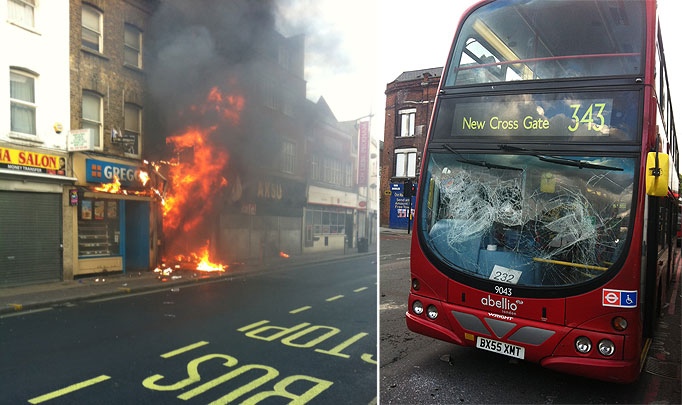
As a red London bus burns a few hundred yards from our house, it’s one of those moments when you stop and think, ‘Did I get this very wrong?’

We have always taken the view that the ‘cheek by jowl’ nature of urban London was worth the aggro. It’s vivid, lively, mixed – at times a bit edgy but alive. And nice ‘people like us’ live dotted all around.

But people who are not like us live all around too. And when it all goes up in smoke and dead eyed teenagers smash up your high street, it makes you think.

In Aristotle’s day another city state or a neighbouring tyrant could violently disturb your contemplation. In Montaigne’s, frequent bouts of plague and civil war.

A few boarded up shop fronts and burnt out buildings is hardly a siege and sacking or a street by street pogrom. But still. It feels bad. I’ve been anxious today. For my kids, for my other half, our house and our safety. We are always but a few authority figures away from mindless violence, a few laws from anarchy.

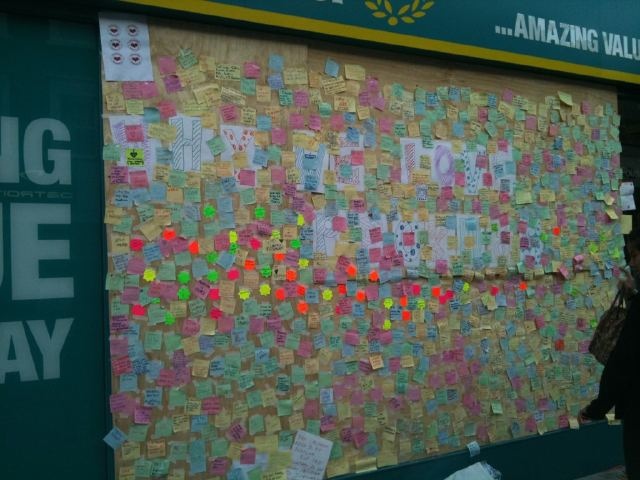
Ordinary decent people are feeling it too. I’ve seen several almost exaggerated acts of courtesy and consideration between people of all colours and classes on my way to and from work. Pausing to let each other pass, small acknowledgements and hesitant smiles. In these acts people are trying to say “It’s ok, we’re ok.” Post it notes on a boarded up shop eulogise our area and criticise the yobs. A volunteer army came out armed only with brooms to clean up.


It’s finely poised in London today. As Aristotle said man is both the best and worst of animals.